Reviewed and fact-checked by Sarah Mitchell — May 29, 2026
Hardwood vs Laminate Flooring is one of the most consequential home decisions you can make, and the debate comes down to three factors: your budget, your lifestyle, and how long you plan to stay in your home. Both have improved dramatically — today’s laminate can fool most people, and engineered hardwood brings real wood within reach of more budgets. This Hardwood vs Laminate Flooring guide covers the cost math, durability, moisture performance, and resale impact you need to know before you commit.
Quick Comparison: Our Top Picks
| Feature | Pergo TimberCraft + WetProtect Laminate Flooring, Wheaton Oak | Bruce Dundee Strip Solid Hardwood Flooring, Natural Oak, 3.25″ |
|---|---|---|
| Price | $2.69/sqft | $6.49/sqft |
| Rating | 4.5/5 | 4.6/5 |
| Best For | Waterproof budget | Classic value |
| Top Pro | Excellent quality and design | Excellent quality and design |
Frequently Asked Questions
What flooring is best for high-traffic areas?
Luxury vinyl plank (LVP) is the top choice for high-traffic areas, with a wear layer of 20+ mils lasting 15–25 years under heavy foot traffic. Porcelain tile (rated PEI 4 or 5) lasts 50+ years but costs 40% more to install. Engineered hardwood with a 4mm+ wear layer handles moderate traffic for 20+ years. Avoid solid hardwood in entryways — it dents 3× faster than LVP.
How do I choose between hardwood and luxury vinyl?
Choose hardwood ($6–$12/sq ft installed) if you want 30–100 year lifespan and increased home value (3–5% ROI at resale). Choose LVP ($3–$7/sq ft installed) if you need waterproof flooring for kitchens, basements, or bathrooms — it handles standing water for up to 72 hours. LVP is 60% quieter underfoot and installs in half the time, but hardwood can be refinished 3–5 times while LVP must be replaced.
What rug size works for each room?
Living room: 8×10 or 9×12 feet (all front furniture legs on rug). Bedroom: 8×10 under a queen bed with 18–24 inches extending on 3 sides. Dining room: table length + 48 inches × table width + 48 inches (24-inch chair pullout per side). Entryway: 3×5 or 4×6 feet. A rug that’s too small is the #1 decorating mistake — when in doubt, go one size up.
How do I maintain hardwood floors long-term?
Sweep or vacuum 2–3 times per week (use a soft-bristle attachment to avoid scratches). Damp-mop monthly with a pH-neutral cleaner — never use vinegar (pH 2.4 damages finish over time). Recoat polyurethane every 5–7 years ($1.50–$3/sq ft) and fully refinish every 15–20 years ($3–$5/sq ft). Place felt pads (replace every 6 months) under all furniture legs to prevent 90% of dents and scratches.
What flooring works best with underfloor heating?
Porcelain and ceramic tile are the best conductors for underfloor heating, transferring 95% of heat energy to the room surface. Engineered hardwood (under 15mm thick) works well at 85% efficiency. LVP is compatible if rated for radiant heat (check for max 85°F surface temp rating). Solid hardwood and bamboo are not recommended — they expand 2–3% with heat cycling, causing gaps and warping within 2–3 years.
See these ideas in your own room — before you buy anything
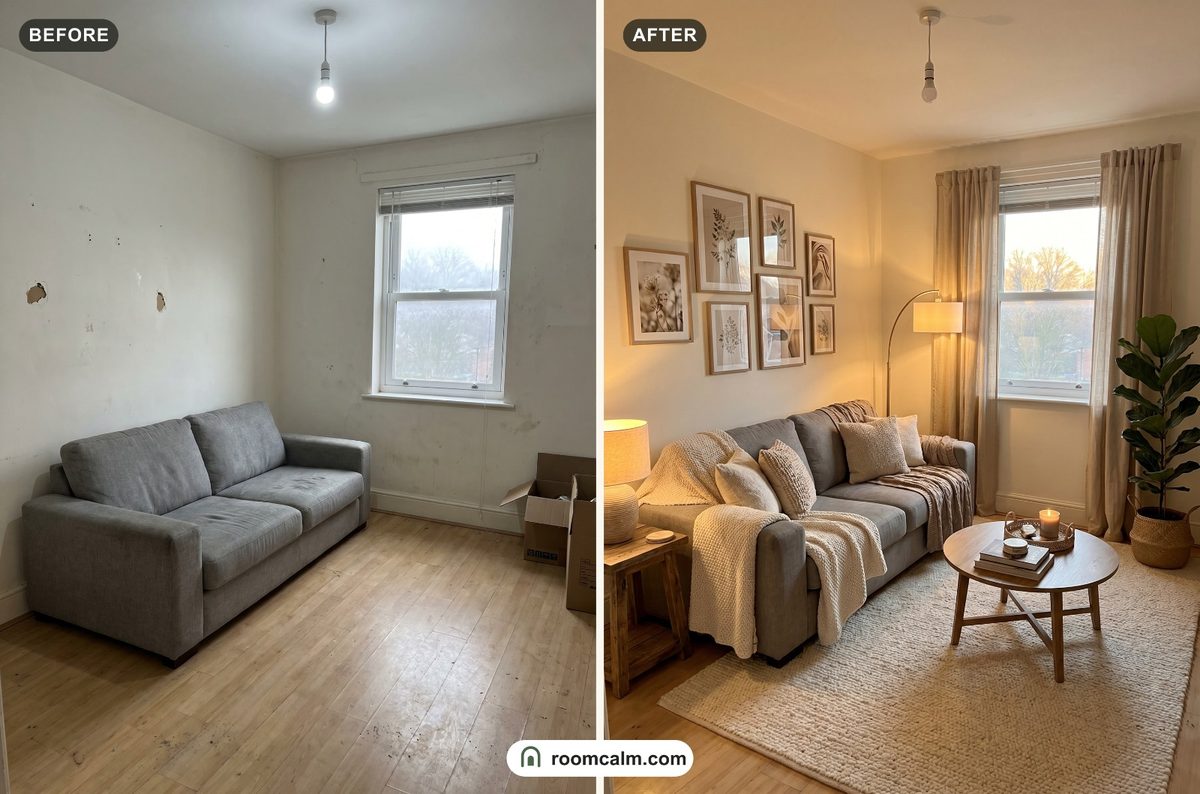
Upload a photo of your room and RoomCalm’s AI redesigns it — keeping your actual furniture — then tells you exactly what to change, in plain English.
Redesign my room free →First redesign free · No signup
Cost Comparison
Key Takeaways
- Budget drives the choice — laminate saves about $4–$7 per sq ft versus solid hardwood, which can mean a $2,000–$3,500 difference in a 500 sq ft room.
- Durability depends on damage type — quality laminate often beats wood on scratch resistance, but hardwood can be refinished 3–5 times, while laminate must be replaced if the surface fails.
- Moisture changes the ranking — for kitchens, bathrooms, and basements, LVP is usually the smarter 2026 option because standard hardwood and laminate both struggle with water exposure.
Solid hardwood runs $6–$12 per square foot installed. Engineered hardwood is $4–$8. Good laminate costs $2–$5 installed. For a 500 sq ft area, that’s the difference between $3,000 and $6,000 — significant for most homeowners.
Durability
Laminate actually wins for scratch resistance. The aluminum oxide wear layer on quality laminate is harder than most wood species. However, when laminate does get damaged, it can’t be refinished — it must be replaced. Hardwood can be sanded and refinished 3–5 times over its lifetime, potentially lasting 100+ years.
Moisture Resistance
Neither traditional hardwood nor standard laminate handles water well. For moisture-prone areas (kitchens, basements, bathrooms), consider LVP instead of either. If you must choose between the two, laminate with a waterproof core (like Pergo Outlast) handles occasional spills better than hardwood.
Resale Value
Real hardwood adds measurable resale value — studies consistently show a 2–5% home value increase. Laminate is neutral at best. If you’re in a home you plan to sell within 10 years, hardwood pays for itself.
- Choose hardwood if: you want long-term value, can invest more upfront, and prefer authentic materials
- Choose laminate if: you need durability on a budget, have kids/pets, or plan to update floors again in 10–15 years
- Consider LVP if: moisture is a concern in any room you’re flooring
How to Choose the Right Flooring for Every Room
Flooring is the largest surface in any room, and the wrong choice is expensive to fix. Start by matching the flooring type to the room conditions. Kitchens and bathrooms need waterproof options — luxury vinyl plank (LVP) or porcelain tile. Living rooms and bedrooms offer more flexibility with hardwood, engineered wood, or quality laminate. Basements require moisture-resistant options like LVP or sealed concrete.
In 2026, luxury vinyl plank dominates the market for good reason. It is waterproof, scratch-resistant, comfortable underfoot, and costs $2-$5 per square foot installed — about half the price of hardwood. Brands like LifeProof (Home Depot exclusive) and COREtec offer realistic wood-grain textures that are genuinely difficult to distinguish from real hardwood at a normal viewing distance.
For real hardwood, white oak continues to be the most popular species. It is harder than red oak, takes stain more consistently, and resists water better. However, at $8-$15 per square foot installed, it is a significant investment. Hardwood flooring adds proven resale value, but only if you choose a timeless finish — avoid trendy gray-washed stains that may date quickly.
Area Rugs: The Fastest Way to Transform a Floor
An area rug is the most flexible flooring decision you can make because it is reversible and portable. The most common mistake is choosing too small — in a living room, at minimum the front legs of all seating furniture should rest on the rug. For dining rooms, add 24 inches to each side of the table to accommodate pulled-out chairs. A 5×7 rug in a living room almost always looks too small; start at 8×10.
Material matters for durability. Wool rugs are the gold standard for living rooms — they resist stains, feel soft, and age beautifully over decades. Polypropylene rugs work best for high-traffic areas and homes with pets because they are stain-proof and washable. For bedrooms, a plush polyester or shag rug adds warmth underfoot at a fraction of wool prices. Browse our best area rugs under $200 for top picks.
Flooring Maintenance Tips That Extend the Life of Your Floors
Preventive care costs nothing and saves thousands. Place felt pads under all furniture legs — this single step prevents the majority of hardwood and laminate scratches. Use doormats at every entrance to catch grit before it reaches your floors. For hardwood, avoid wet mopping; use a damp microfiber mop with a pH-neutral cleaner like Bona.
For vinyl plank and laminate, never use steam mops — the heat can delaminate the planks over time. A simple spray mop with the manufacturer-recommended cleaner is all you need. For more on choosing between flooring types, check our hardwood vs laminate comparison or see the best flooring options for 2026.
More Hardwood vs Laminate Flooring Products We Recommend
Beyond our two top picks, here are eight additional flooring products and accessories that consistently deliver. Each one solves a specific Hardwood vs Laminate Flooring decision: durability, installation, maintenance, or moisture protection.
1. LifeProof Sterling Oak Luxury Vinyl Plank — $2.59/sqft
The undisputed value leader in luxury vinyl. Sterling Oak is the most-purchased LVP color in America for good reason: a warm gray-brown that works with almost any decor and fits both traditional and modern spaces. The 22-mil wear layer is rated for commercial use and waterproofing is total.
2. Bona Hardwood Floor Cleaner Spray, 32 oz — $9.99
The cleaner that hardwood manufacturers actually recommend. Bona is pH-neutral, leaves no residue, and is safe for polyurethane finishes. Skip vinegar and water, and never use Pine-Sol on wood floors. A single bottle lasts most homeowners about a year of weekly cleaning.
3. SoftStep Premium Felt Furniture Pads, 240 Pack — $14.99
Felt pads under every furniture leg prevent the majority of hardwood scratches. A 240-pack covers a typical home and lasts about 6 months before they need replacement. This is the single highest-ROI maintenance purchase you can make for any wood or laminate floor.
4. ROBEROY 2-in-1 Floor Underlayment, 100 sqft Roll — $34.99
Underlayment is non-negotiable for both laminate and engineered hardwood floating floors. It cushions the floor against the subfloor, deadens noise, and provides a vapor barrier in concrete-slab installations. Skipping underlayment voids most flooring warranties.
5. Roberts 10-26 Pro Flooring Installation Kit — $44.99
If you are installing laminate or floating engineered hardwood yourself, this kit pays for itself on a single room. Includes a tapping block, pull bar, and 30 spacers — the three tools you absolutely need to install click-lock flooring without damaging the planks. Saves several hundred dollars in pro labor.
6. Bissell PowerFresh Steam Mop — $89.99
Important: only use steam mops on tile, sealed stone, or vinyl rated for steam. Never on hardwood or standard laminate — the heat warps and delaminates them. The Bissell PowerFresh is the best-selling steam mop because it is light, fast, and chemical-free for the surfaces where steam is safe.
7. Minwax Hardwood Floor Reviver, 32 oz — $24.99
If your hardwood floor looks dull but does not need full sanding, a coat of floor reviver restores the shine in about an hour. Apply with a microfiber pad and let it cure overnight. Costs less than 30 dollars and adds 1 to 2 years to the time before you need a full recoat.
8. Gorilla Grip Original Felt Rug Pad, 8×10 — $59.99
An area rug on hardwood needs a quality rug pad. Without one, the rug slides, the backing damages the finish, and dirt gets trapped between the rug and floor. The Gorilla Grip felt pad adds cushioning and prevents both slipping and finish damage. Sized to your rug, not your room.
Hardwood vs Laminate Flooring Decision Checklist
Run through this checklist before you commit to one or the other. Each question pushes you toward the right answer for your specific situation.
- Where will the floor go? Kitchen, bathroom, basement, mudroom — lean LVP or laminate with waterproof core. Living room, bedroom, dining room — hardwood is on the table.
- What is your total budget? Under $5/sq ft installed: laminate. $5–$8/sq ft: engineered hardwood or premium laminate. Over $8/sq ft: solid hardwood becomes viable.
- How long will you stay in this home? Less than 5 years and the laminate ROI wins. More than 10 years and hardwood pays back via lower lifetime cost and resale.
- Do you have pets or kids? Quality laminate or LVP wins on scratch and dent resistance. Hardwood will dent and show wear faster.
- Will you DIY or hire a pro? Click-lock laminate is the easiest DIY install. Solid hardwood almost always requires professional installation.
- Is resale value important? Real hardwood adds 2–5 percent to home value. Laminate adds zero.
- How important is acoustic comfort? Laminate is hollow-sounding. Engineered or solid hardwood feels warmer and quieter underfoot.
- Is humidity stable in your home? Solid hardwood needs 35–55 percent humidity year-round or it warps. Laminate tolerates wider swings.
Pro Tips for the Hardwood vs Laminate Flooring Decision
We surveyed flooring contractors about the questions homeowners forget to ask before they buy. The same five tips came up over and over.
Order samples and live with them for a week. Pictures online lie. Bring 3 to 5 samples home, lay them in the actual room, and look at them in morning, noon, and evening light. The grain pattern that looked perfect online may clash with your trim or cabinets in person.
Always buy 10 percent extra. You will damage planks during installation and you will need replacements years later. Buying 10 percent extra now from the same dye lot is far cheaper than hunting for matching planks in 5 years.
Acclimate the flooring before installing. Both hardwood and laminate need to sit in the room for 48 to 72 hours before installation so they reach the same temperature and humidity. Skipping this step is the number one cause of buckling and gaps after install.
Choose a timeless color. Trendy gray-washed stains looked fresh in 2018 and dated in 2024. Natural oak, walnut, and mid-tone browns have remained popular for decades because they work with almost any decor.
Inspect the subfloor first. No flooring will perform well on a damaged or uneven subfloor. Check for water stains, soft spots, and level (no more than 3/16 inch variation over 10 feet) before you spend a dollar on the new floor.
Common Hardwood vs Laminate Flooring Mistakes
These five mistakes are the top regrets we hear from homeowners after they install new floors.
Mistake 1: Choosing hardwood for a basement. Solid hardwood cannot go below grade because of moisture. Engineered hardwood is acceptable, but LVP is almost always the smarter call for basements.
Mistake 2: Buying the cheapest laminate. Bargain laminate at under 1 dollar per square foot has a thin wear layer (6 mils or less) and will look worn within 2 to 3 years. Spend at least 2 dollars per square foot for a 12-mil or thicker wear layer.
Mistake 3: Skipping the underlayment. No underlayment = noisy floor, voided warranty, and faster failure. Always install the manufacturer-specified underlayment.
Mistake 4: Installing in the wrong direction. Plank flooring should run parallel to the longest wall in the room or toward the main light source. Installing perpendicular makes rooms feel smaller.
Mistake 5: Forgetting expansion gaps. Both hardwood and laminate expand with humidity and need a 1/4 to 3/8 inch gap around the perimeter of the room (hidden by baseboards). Skip this and the floor buckles.
Hardwood vs Laminate: Our Expert Verdict
When it comes to hardwood vs laminate, the options in 2026 are better and more accessible than ever. We have researched and reviewed the top hardwood vs laminate picks to help you save time and money. For the best results with hardwood vs laminate, focus on quality over quantity and choose pieces that work with your existing space and personal style.
Our hardwood vs laminate recommendations above represent the best value across every price range. Bookmark this hardwood vs laminate guide and revisit it whenever you are ready to shop — we update our picks regularly as new products become available and prices change.
Our Top Picks
Pergo TimberCraft + WetProtect Laminate Flooring, Wheaton Oak
Amazon
The most realistic laminate flooring available. Pergo WetProtect solves the biggest laminate weakness — water damage — making it viable for kitchens and mudrooms.
Bruce Dundee Strip Solid Hardwood Flooring, Natural Oak, 3.25″
Amazon
The benchmark solid hardwood that real hardwood lovers compare everything against. Solid oak lasts generations and can be sanded and refinished repeatedly.
Stop guessing — see your room redesigned before you spend a dollar
Try RoomCalm free →First redesign free · No signup · Keeps your actual furniture