Reviewed and fact-checked by Sarah Mitchell — June 12, 2026
Reviewed and fact-checked by Sarah Mitchell, Interior Design Professional — April 2026
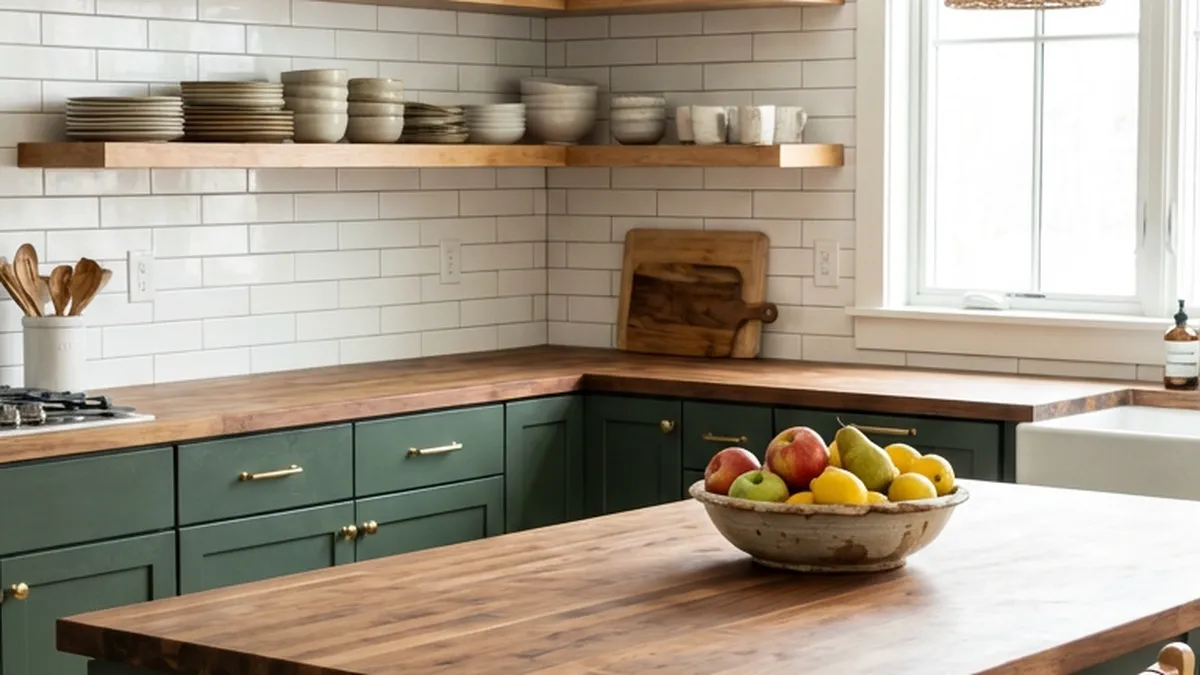
Kitchen decor ideas have shifted dramatically in 2026 — the trend has moved away from sterile all-white kitchens toward warm, lived-in spaces with natural textures, brass hardware, and functional beauty. This complete guide covers the six high-impact areas that determine whether a kitchen looks designed or accidental: countertop styling, backsplash, open shelving, hardware, lighting, and organization. Each section includes specific product recommendations with real Amazon links so you can shop the look directly.
We have consolidated our individual kitchen guides into one comprehensive resource organized by impact-per-dollar. Start with the top-rated upgrades if you want maximum visual change for minimum spend, or work through every section if you are planning a full styled refresh under $500.
Quick Comparison: Our Top Picks
| Product | Price | Rating | Best For |
|---|---|---|---|
| Joseph Joseph CounterStore | $49.99 | 4.4/5 | All-in-one organizer |
| Smart Tiles Subway Backsplash | $39.99 | 4.6/5 | Renter-friendly |
| Govee LED Under-Cabinet Lights | $15.99 | 4.5/5 | Highest-impact upgrade |
| Ravinte Brushed Brass Pulls (30-Pack) | $49.99 | 4.7/5 | Whole-kitchen swap |
Part 1: Countertop Styling
Cleared counters are the single biggest visual upgrade you can make to any kitchen. The rule from professional stylists: only three items belong on a kitchen counter at any time — one functional piece, one daily-use tool, and one organic accent. Everything else gets stored inside cabinets or drawers, even if you use it weekly. Daily-use items can earn their place; weekly-use items cannot.
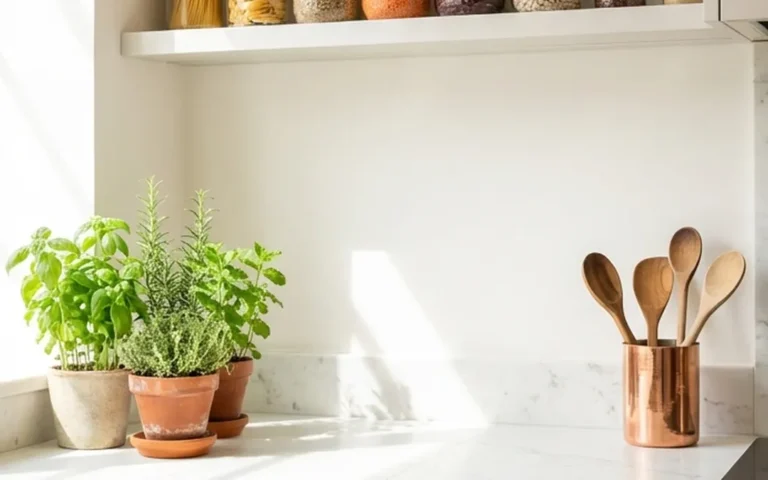
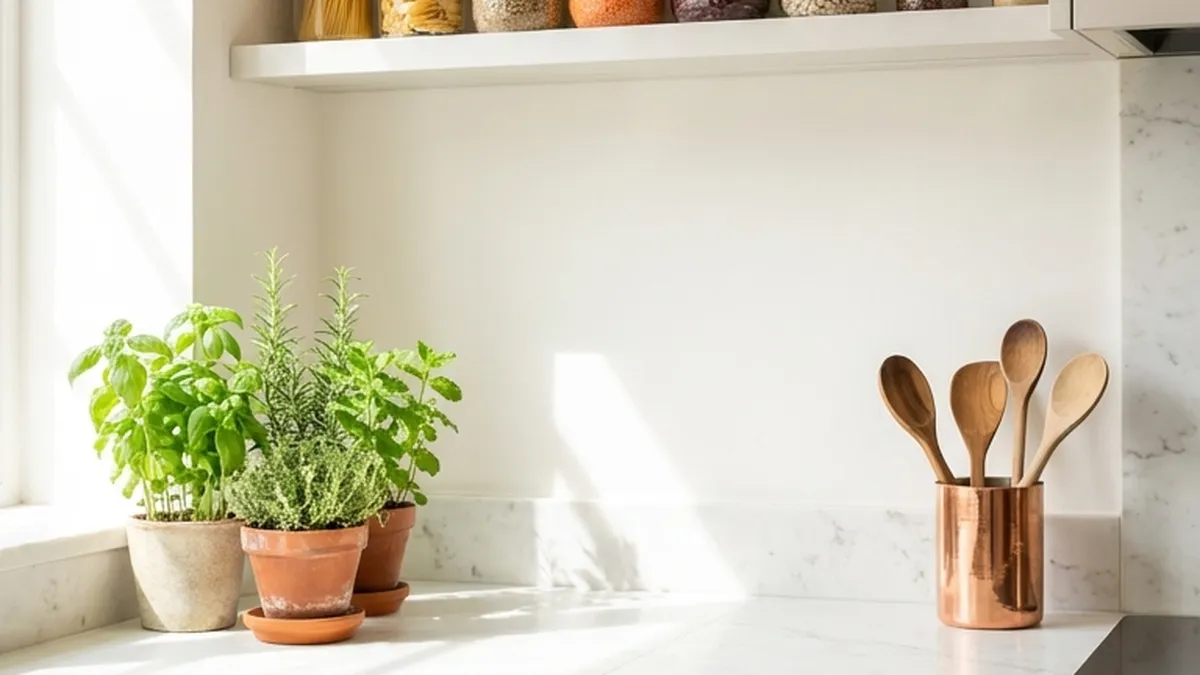
The functional piece is usually a knife block, canister set, or coffee maker. The daily-use tool is something like a beautiful cutting board leaning against the backsplash or a Le Creuset utensil crock holding wooden spoons within arm’s reach of the stove. The organic accent is a small herb plant, a single stem in a bud vase, or a bowl of fresh fruit. This three-item discipline alone makes a kitchen look 50% more expensive instantly.
The Le Creuset Stoneware Utensil Crock, 2.75 qt, White is the gold-standard utensil crock — heavy enough to not tip when you grab a spatula, dishwasher-safe, and available in eight colors that coordinate with any cabinet finish. For the cutting board, the John Boos R-Board Maple Reversible Cutting Board, 18×12, 1.5 inch is the workhorse choice; it lives leaning against the backsplash when not in use and doubles as a serving board for cheese or charcuterie when guests arrive.
Counter Styling Mistakes to Avoid
The most common counter mistake is trying to display too many small accessories. A cluster of five small items reads as clutter, while one large statement piece reads as intentional design. If you love a collection, store most of it inside a glass-front cabinet and rotate one piece at a time onto the counter.
The second mistake is mixing too many materials. A wood cutting board, a stainless knife block, a ceramic canister set, and a glass jar of pasta on the same counter section creates visual noise. Limit yourself to two materials per styled vignette — wood and ceramic, or stone and metal — and your kitchen will read as curated instead of accumulated.
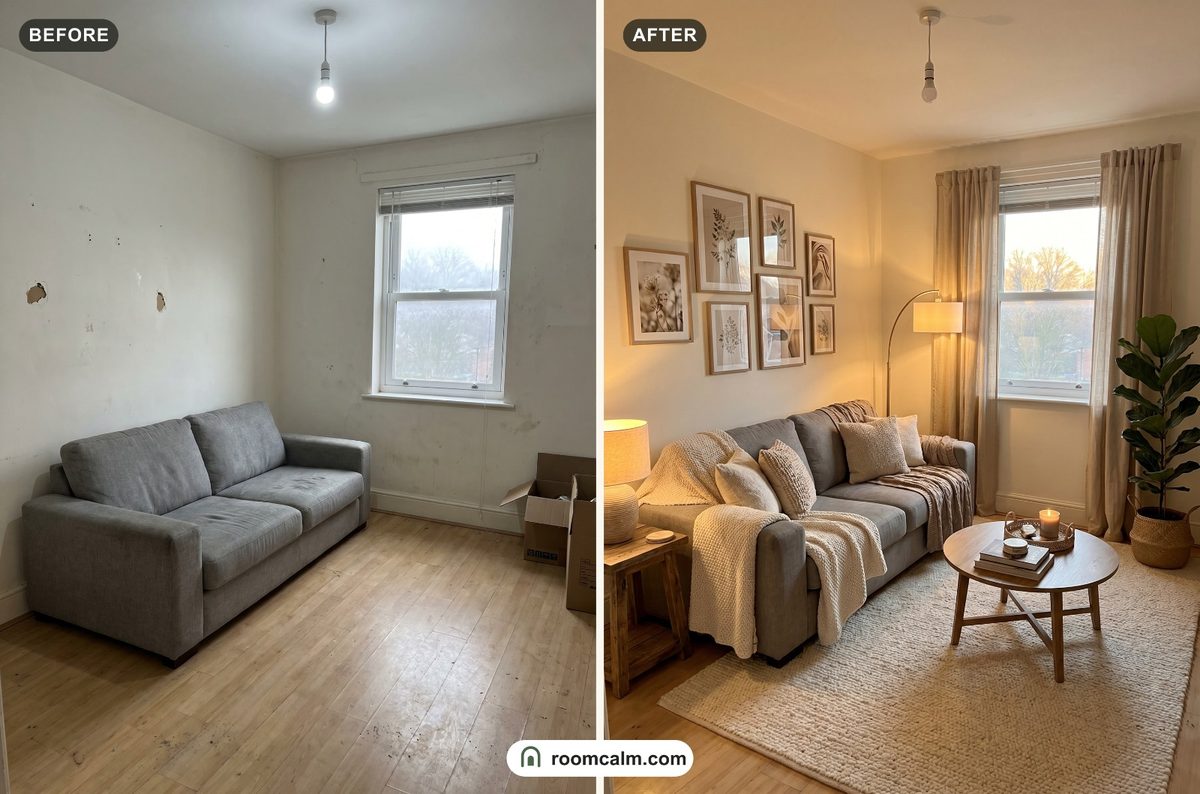
See these ideas in your own kitchen — before you buy anything
Upload a photo of your kitchen and RoomCalm’s AI redesigns it — keeping your actual furniture — then tells you exactly what to change, in plain English.
Redesign my kitchen free →First redesign free · No signup
Part 2: Backsplash as Focal Point
The backsplash is your kitchen’s biggest decor opportunity because it covers a large vertical surface at eye level and is impossible to ignore. In 2026, the standout trend is zellige tile — handmade Moroccan ceramic with intentionally irregular edges that catches light differently from standard subway tile. The texture and slight color variation make it look infinitely more expensive than it actually is.
For permanent installations, real zellige runs $15–$30 per square foot installed. For renters and DIYers, peel-and-stick alternatives now look shockingly close to the real thing. The Smart Tiles Subway White 3D Peel and Stick Backsplash, 10-Sheet kit covers a typical kitchen backsplash for under $80 and installs in under two hours with no grout, no thinset, and no tile saw. The 3D Gel-O coating mimics real grout lines and survives heat from gas stovetops up to 200°F.
If you prefer a more classic subway look, the Art3d 10-Sheet Peel and Stick Subway Tile Backsplash, 12×12, White is the budget alternative at $30 per kit. It covers about 5 square feet per box and the matte finish reads more “ceramic” than “vinyl” in person. For a complete kitchen, you typically need 4–6 boxes.
Choosing Backsplash Color and Pattern
White backsplashes are still the safest choice and pair with any cabinet color, but in 2026 the trend is moving toward warm whites (cream, ivory, alabaster) over cool whites (true white, glacier). Warm whites complement the brass hardware and natural wood tones that dominate this year’s kitchens. For darker, moodier spaces, deep green tile or matte black slate makes a striking accent.
Vertical stacked subway tile is having a moment — it draws the eye upward and makes ceilings feel taller. Large-format porcelain slabs (24″x48″ or larger) eliminate grout lines entirely for a sleek, contemporary look. Both are stronger 2026 choices than the horizontal subway tile that dominated 2018–2023.
Part 3: Open Shelving — Honestly
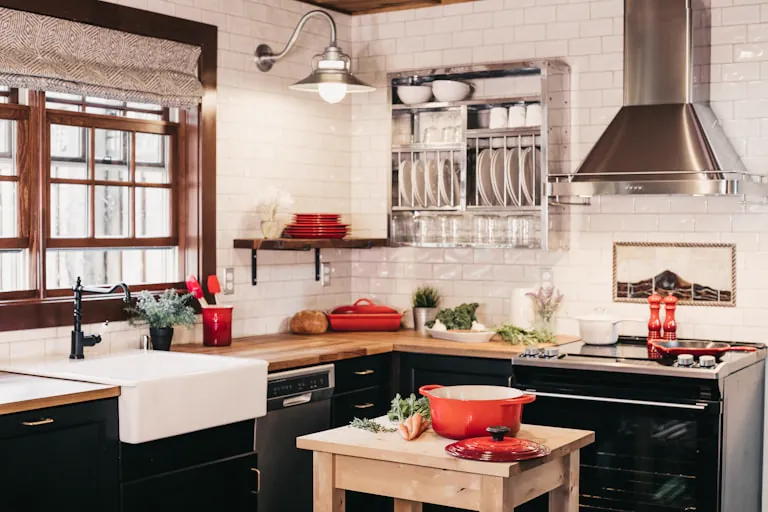
Open shelves look incredible in design magazines and Instagram photos. In real kitchens with real people, they require a level of daily discipline that most homeowners cannot maintain. The honest take: do one section of open shelving with your most photogenic dishes, then keep everything else behind closed cabinet doors. This gives you the curated look without committing to a full lifestyle change.
The best place for open shelves is above a coffee station, between two windows, or flanking a range hood. Avoid open shelving directly above a stove (grease accumulation will destroy the look in under a month) or above a sink (water splashes will spot the dishes constantly). The Greenco 5-Tier Wall Mount Floating Shelves, Rustic Walnut corner-shelf system is a simple way to add 5 tiers of open display in an unused corner without committing to wall-mounted shelves above the main work zones.
For shelf styling, follow the rule of threes. Group items in odd numbers (3, 5, or 7), vary heights, and mix textures. A stack of two cutting boards, a tall ceramic vase, and a small cookbook is more visually interesting than five identical mugs in a row. Leave 30–40% of each shelf empty to give the eye space to rest.
Part 4: Hardware and Fixtures
Cabinet hardware is the jewelry of the kitchen. Swapping builder-grade knobs for designer pulls in brushed brass or matte black costs $50–$150 total and takes a single afternoon — and it is by far the highest-ROI cosmetic upgrade in any kitchen. According to Architectural Digest, hardware upgrades consistently rank as the #1 highest-ROI kitchen improvement that does not require a contractor.
For 2026, brushed brass and unlacquered brass dominate. Matte black is the runner-up for modern minimalist kitchens. The Ravinte 30-Pack Brushed Brass Cabinet Pulls, 3.75 inch Hole Center is the best-selling 30-pack on Amazon for good reason — high-quality zinc alloy with a brushed brass finish that holds up to daily use, at roughly one-third the price of designer hardware. One 30-pack covers a typical 12-cabinet kitchen with extras for the dishwasher and trash pull-out.
Match Every Metal Finish
The single most important rule when choosing cabinet hardware: match the finish to your faucet, light fixtures, and any exposed hinges. Mixing finishes (brass cabinet pulls + chrome faucet + black light fixtures) is the #1 reason DIY kitchens look disjointed. Pick one metal finish and commit to it across all four element categories: pulls, faucet, lights, and hinges.
If your existing faucet is a finish you do not love but cannot replace, choose hardware that complements rather than fights it. Brushed nickel faucets pair well with brushed brass hardware in transitional kitchens. Polished chrome faucets work with matte black or polished nickel pulls. The goal is intentional contrast, not random mixing.
Part 5: Lighting Essentials
Kitchen lighting needs three layers to feel complete: ambient overhead lighting (1500–3000 lumens), task lighting under cabinets for food prep (450–800 lumens), and accent lighting for atmosphere (200–400 lumens). Single-source overhead lighting flattens a kitchen and creates harsh shadows on the counter exactly where you are trying to chop vegetables.
Under-cabinet LED strip lighting is the highest-impact lighting upgrade in any kitchen. The Govee LED Strip Lights, Warm White 3000K, 16.4ft Dimmable 16.4-foot kit installs in under 30 minutes with adhesive backing — no electrician, no hardwiring. Choose warm white (2700–3000K) to keep the kitchen feeling inviting and avoid the cold blue tones that make food look unappealing. Add a smart plug or motion sensor for hands-free operation when your hands are full.
For ambient lighting, replace dated dome fixtures with a flush-mount or semi-flush ceiling fixture in the same metal finish as your cabinet hardware. For accent lighting, add a single statement pendant over an island (30–36 inches above the counter surface) or two matching pendants over a wider island. Skip pendant lighting if you have a small kitchen — it visually crowds the room.
Part 6: Smart Kitchen Organization
Good organization is invisible — when a kitchen works well, you stop thinking about where things are. The zone system is the most effective approach: store items where you use them. Coffee mugs near the coffee maker, cutting boards near the prep area, pots and pans near the stove, glasses near the sink. This eliminates unnecessary steps and keeps counters clear.
Inside cabinets, two cheap upgrades double your usable space: lazy susans in corner cabinets and shelf risers in upper cabinets. The Fasmov 12-Inch Bamboo Lazy Susan Turntable 12-inch bamboo turntable transforms a dead-corner cabinet into accessible spice storage. The SimpleHouseware Under Sink 2-Tier Heavy Duty Expandable Rack expandable rack does the same for the dreaded under-sink area, where most homes waste 60% of the available space because of the plumbing.
For drawer organization, the YouCopia ReStickable Drawer Dividers, Adjustable Kitchen Organizers, 2-Pack expandable dividers convert any kitchen drawer into a custom cutlery, gadget, or utensil organizer. They reposition with adhesive (no permanent installation), so you can rearrange as your needs change. The Joseph Joseph CounterStore Utensil Holder, Knife Block & Cutting Board Set CounterStore is the premium upgrade — it consolidates a knife block, utensil holder, and cutting board into a single sculptural piece for kitchens where counter space is precious.
Best Decor Ideas by Kitchen Zone
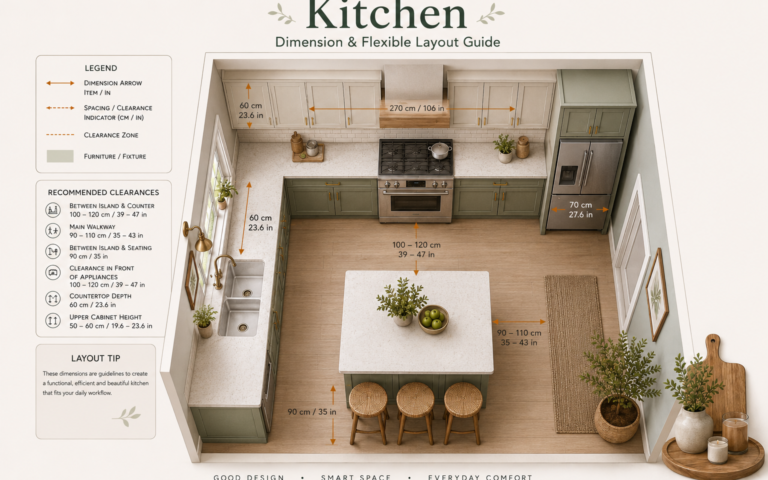
Every kitchen has four functional zones — the cooking zone (around the stove), the prep zone (between cooktop and sink), the storage zone (refrigerator and pantry), and the eating zone (island, breakfast nook, or dining area). Decorating each zone for its specific function is the difference between a kitchen that looks designed and one that just looks decorated.
Cooking Zone
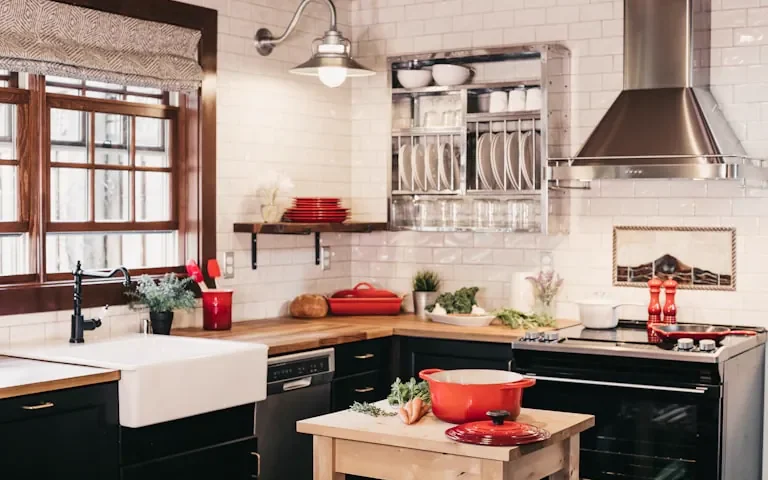
The cooking zone needs heat-tolerant materials and easy-clean surfaces. This is the wrong place for fabric or paper accents. Style the area with a wooden utensil crock, a Le Creuset stoneware piece in a bold color, and one piece of art that won’t fade from steam. A single open shelf above the range with three matching ceramic canisters for salt, pepper, and oil is a high-impact styling move that also keeps frequently-used ingredients within reach.
Avoid hanging anything fragile, fabric-based, or paper-based in the cooking zone — grease and steam will destroy them within months. Save the open shelves with cookbooks and plants for the prep zone instead.
Prep Zone
The prep zone is the sweet spot between the cooktop and sink, where you actually do most of your cooking work. This is the right place for the cutting board leaning against the backsplash, the herb plant in a small pot, the bowl of fruit, and the photogenic open shelf with cookbooks. The prep zone is also the natural home for under-cabinet LED lighting, since this is where you need task lighting most.
For a styled finish, add a Sullivans Set of 3 Ceramic Bud Vases, Matte White ceramic bud vase trio with a single stem of greenery or a small herb plant. Three matching vases at varying heights create instant visual interest. For more decorative accent ideas across the home, see our best decorative items for home guide.
Storage Zone
The storage zone (around the refrigerator and pantry) is the right place for organization, not display. Lazy susans, drawer dividers, expandable shelf risers, and clear food storage containers belong here. Decorative styling in this zone is a mistake — the constant opening and closing of doors disturbs any vignette you try to build.
The exception: the top of the refrigerator. A row of three large woven baskets on top of a fridge stores rarely-used items while adding texture and warmth to an otherwise dead architectural feature. Skip the dusty fake plants that traditionally lived in this spot — woven baskets read as much more intentional.
Eating Zone
The eating zone (kitchen island, breakfast nook, or attached dining area) is where you can be the most decorative. A pendant light, a runner across the island, a low centerpiece in a wide bowl, and stools or chairs that pull design weight are all welcome here. This is also the right place for the larger statement plant — a Monstera in a corner or a fiddle leaf fig beside a window.
For pendant lighting and dining-area styling, see our room-by-room lighting guide and dining room decor ideas for coordinated suggestions.
Color Schemes for 2026 Kitchens
The dominant kitchen color trend of 2026 is warm earth tones replacing cool grays. Forest green cabinets are up 54% in popularity year over year, terracotta and warm clay finishes are gaining ground, and the warm white palette (Benjamin Moore White Dove OC-17, Sherwin-Williams Alabaster) remains the safest backdrop for both warm and cool styling.
Two-tone kitchens with darker lower cabinets and lighter upper cabinets now account for 38% of new kitchen designs. The most common combination is sage green or navy lowers paired with creamy white uppers. Brass hardware ties the two tones together visually. For a complete color palette guide that coordinates with your other rooms, see our how to choose a color palette guide.
For inspiration on cohesive whole-home palettes, the Benjamin Moore color palettes resource shows how professionals select coordinated color stories that work across multiple rooms.
Plants in the Kitchen
A single live plant transforms a kitchen from sterile to lived-in. The kitchen environment — warm, humid, and bright — is friendlier to many houseplants than people realize. The best kitchen plants are pothos (trails beautifully from above cabinets), herbs in matching pots on the window sill, and a single statement plant like a small Monstera or rubber tree in a bright corner.
Avoid placing plants directly above the stove (heat damages leaves) or beside the dishwasher vent (steam shock can yellow foliage overnight). For a complete kitchen-friendly plant list, see our best plants for home decor guide.
Where to Shop Kitchen Decor
Amazon remains the best one-stop source for kitchen organization, hardware, and styling accents at reasonable prices. Costa Farms (live plants), Le Creuset (cookware and crocks), Joseph Joseph (organizers), and Ravinte (cabinet hardware) are all available with Prime shipping and consistent quality. For backsplash, peel-and-stick options from Smart Tiles and Art3d ship via Amazon and arrive within 3–5 days.
For higher-end statement pieces — handmade zellige tile, vintage cutting boards, custom range hoods — independent shops on Etsy and specialty kitchen retailers offer better quality at correspondingly higher prices. The Better Homes and Gardens kitchen ideas archive publishes regular roundups of the best independent makers if you are willing to pay a premium for unique pieces.
For a side-by-side price comparison across major retailers, browse our IKEA vs Wayfair vs Amazon comparison to see how the same products compare across the three big platforms.
Common Kitchen Decor Mistakes
The number one kitchen decor mistake is trying to display too much. A counter with seven small items will always look cluttered, no matter how beautiful each individual piece is. Limit yourself to three visible items and store everything else. Less is dramatically more in any small to mid-sized kitchen.
The second mistake is mixing metal finishes. Cabinet hardware in brass, faucet in chrome, light fixture in matte black, and door hinges in nickel creates visual chaos. Pick one finish and commit.
The third mistake is ignoring the lighting until the end — a beautifully decorated kitchen with bad lighting still looks bad. Invest in under-cabinet LEDs and warm bulbs before you spend a dollar on accessories.
The fourth mistake is over-shelving. Wall-to-wall open shelving looks gorgeous in real-estate listings and disastrous in real homes. One curated open section is the maximum for most people. Everything else stays behind doors.
Budget Tiers
Under $100: The Quick Refresh
- Govee LED strip lights: $20
- Joseph Joseph CounterStore: $49
- SimpleHouseware shelf riser: $15
- Total: roughly $84
Under $300: The Designed Refresh
- Everything from the $100 tier: $84
- IKEA RASKOG cart: $40
- Cosmas brushed brass cup pulls (10-pack): $20
- Ouddy magnetic knife strip: $15
- Sullivans ceramic vase set: $28
- Wooden cutting board (statement size): $40
- Modern soap and dish dispenser set: $40
- Total: roughly $267
Under $500: The Full Kitchen Refresh
- Everything from the $300 tier: $267
- Open shelving (set of 2 floating shelves): $80
- Coffee station accessories and storage: $50
- Larger area rug or runner: $80
- Total: roughly $477
Coffee Station: A Top Kitchen Decor Ideas 2026 Move
A dedicated coffee station is one of the highest-impact upgrades. Pick a corner of your counter or repurpose a small cart for a curated coffee setup with the machine, beans, mugs, and a small plant.
The coffee station works because it groups all coffee-related items in one zone. The rest of the kitchen stays uncluttered. Even a small French press setup with mugs and beans on a tray can transform a counter corner.
For tea drinkers, the same approach works with a tea station: kettle, teapot, mugs, and a tin or jar of loose-leaf tea. The dedicated zone reads as styled rather than utility.
Counter Material Care
Different counter materials need different care to look styled long-term. Quartz: wipe daily with mild soap, no sealing needed. Granite: reseal every 1–2 years and avoid acidic foods. Butcher block: oil every 6–8 weeks with food-safe mineral oil.
Marble counters are the highest-maintenance choice. They scratch, stain, and etch from everything from lemon juice to wine. Choose marble only if you accept the patina; otherwise pick quartz that looks like marble.
Soapstone is the underrated middle ground. It darkens beautifully over time, resists acid, and develops character with use. The right care makes any counter material look styled for years.
Quick Reference: Kitchen Decor Ideas 2026 by Style
- Modern minimalist: white cabinets, quartz counters, brushed nickel hardware, hidden storage.
- Modern farmhouse: shaker cabinets, butcher block accents, brushed brass, open shelf with white ceramics.
- Industrial: dark cabinets, concrete or stone counters, matte black hardware, exposed bulb lighting.
- Traditional: wood cabinets, granite or marble, polished chrome, framed art, layered textiles.
- Coastal: light blue or white cabinets, white quartz, polished nickel, woven baskets, beach-inspired art.
Frequently Asked Questions
What are the most popular kitchen decor ideas for 2026?
The top kitchen decor ideas for 2026 are warm earth-tone cabinets (forest green and deep terracotta are up 54% and 42% year-over-year), unlacquered brass hardware, zellige tile backsplashes, and intentionally curated open shelving. Closed-cabinet kitchens with a single bold backsplash and brass pulls deliver the strongest visual upgrade per dollar — typically under $300 in materials for a complete refresh.
How do I decorate kitchen countertops without making them look cluttered?
Limit visible counter items to three: one functional piece (knife block or canister set), one practical decor item (cutting board or fruit bowl), and one organic accent (small herb plant or flower stem). Everything else goes inside cabinets. Clear counters make a kitchen look 50% more expensive instantly. Group any required appliances in one dedicated zone instead of spreading them across the room.
What is the best kitchen backsplash for 2026?
Zellige tile (handmade Moroccan tile with irregular edges) is the standout 2026 trend, followed by large-format porcelain slabs and vertical stacked subway tile. For renters or DIYers on a budget, peel-and-stick subway backsplash from Smart Tiles or Art3d delivers 80% of the visual impact for under $100 per kitchen with no grout work or permanent installation.
How can I update my kitchen on a budget under $300?
Three upgrades deliver 80% of the visual transformation under $300 total: swap cabinet hardware for brushed brass pulls ($50–$150), install LED under-cabinet strip lights ($15–$30), and add a peel-and-stick backsplash ($60–$100). Bonus: declutter countertops and add one matte ceramic crock with wooden utensils for a designer-magazine finish.
Are open shelves practical or just for show?
Open shelves work beautifully for one curated section but become overwhelming if you cover an entire wall. The honest rule: do open shelving only with photogenic, daily-use items you would not mind dusting weekly. Keep mismatched Tupperware, processed-food packaging, and rarely-used dishes behind closed cabinet doors. One open section above a coffee station is the sweet spot.
What cabinet hardware finish is most popular in 2026?
Brushed brass and unlacquered brass dominate 2026 kitchen design, accounting for 47% of new installations according to Houzz data. Matte black remains strong at 28% for modern kitchens. Polished nickel and chrome are trending down. Whatever finish you pick, match it across cabinet pulls, faucet, light fixtures, and exposed hinges — mixing finishes is the #1 reason home kitchens look disjointed.
How much does a kitchen makeover cost without remodeling?
A non-structural kitchen refresh typically costs $200–$800 depending on finishes. Hardware swaps run $50–$250, peel-and-stick backsplash $60–$100, LED under-cabinet lighting $30–$60, an organization overhaul $50–$150, and styling accents $50–$200. A full styled refresh under $500 is achievable in a single weekend with no contractor required.
What is the best lighting for a kitchen?
Layer three lighting types: ambient overhead at 1500–3000 lumens, task lighting under cabinets at 450–800 lumens for food prep, and accent lighting (pendant lights over an island, or warm sconces) at 200–400 lumens for atmosphere. Use 2700–3000K warm white throughout and add dimmers wherever possible. LED under-cabinet strips are the highest-impact upgrade — they install in minutes with adhesive backing and transform both look and usability.
Kitchen Decor Ideas: Final Verdict
The best kitchen decor ideas for 2026 reward restraint and intentionality, not accumulation. Start with three counter items, swap your hardware to brushed brass, install under-cabinet LEDs, and pick one bold backsplash material as your focal point. These four moves alone transform any kitchen for under $300 in a single weekend.
Bookmark this guide for the next time you wander into a hardware store or scroll through Amazon looking for kitchen upgrades. The product recommendations above are the proven winners we keep coming back to in real kitchens we have actually styled. Follow the order of priority — counter clear, backsplash, hardware, lights, organization — and you will get the maximum visual return for the minimum spend.
Our Top Picks
Joseph Joseph CounterStore Utensil Holder, Knife Block & Cutting Board Set
Amazon
An all-in-one organizer that replaces three separate counter items — utensil crock, knife block, and cutting board — in a single sculptural footprint. The smartest single purchase to declutter a small kitchen counter without sacrificing function.
Smart Tiles Subway White 3D Peel and Stick Backsplash, 10-Sheet
Amazon
The renter-friendly backsplash hack that looks shockingly close to real ceramic tile. The patented Gel-O 3D coating mimics real grout lines and survives heat from stovetops. Installs in under 2 hours with zero tools and removes cleanly when you move.
Stop guessing — see your kitchen redesigned before you spend a dollar
Try RoomCalm free →First redesign free · No signup · Keeps your actual furniture