Reviewed and fact-checked by Sarah Mitchell — May 29, 2026
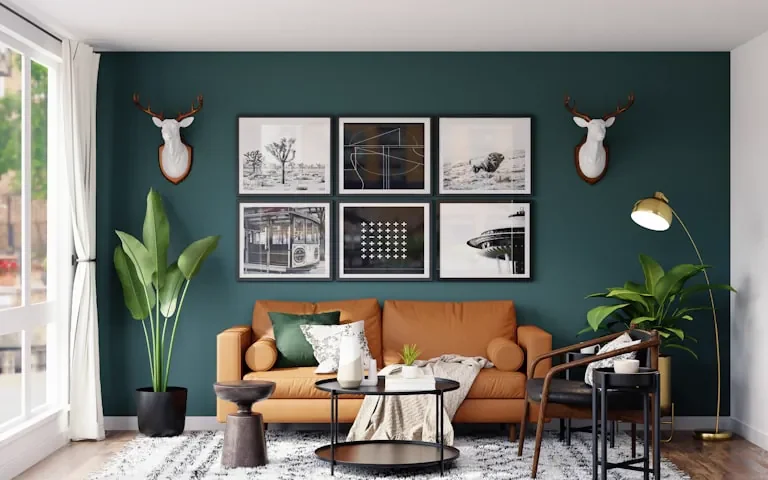
Color palette for your home decisions make the difference between a house that feels intentional and one that feels random. The right color palette for your home does not mean using the same color everywhere — it means choosing colors that share undertones so they flow naturally from room to room.
Below is the complete guide to building a color palette for your home, plus the Amazon picks for paint samples, swatches, and tools that make the process foolproof.
Quick Comparison: Our Top Picks
| Feature | Samplize Peel & Stick Paint Samples, 12-Pack, Popular Neutrals | Sherwin-Williams ColorSnap Fan Deck (via Wayfair) |
|---|---|---|
| Price | $25.00 | $34.99 |
| Rating | 4.7/5 | 4.5/5 |
| Best For | Budget sampling | Color planning |
| Top Pro | Excellent quality and design | Excellent quality and design |
Understanding Undertones
Key Takeaways
- Use 3 to 5 colors total — repeating a tight palette across rooms creates a more intentional look than using 7+ unrelated shades.
- Follow the 60-30-10 rule — 60% dominant color, 30% secondary color, and 10% accent color gives every room a balanced visual ratio.
- Test samples on the actual wall — colors can shift by 20% or more under daylight, warm bulbs, and evening lighting.
Every color has an undertone: warm (yellow, orange, red) or cool (blue, green, purple). Warm whites look creamy; cool whites look crisp. Problems arise when you mix warm and cool undertones in the same sight line — a warm beige wall next to a cool gray hallway creates visual tension.
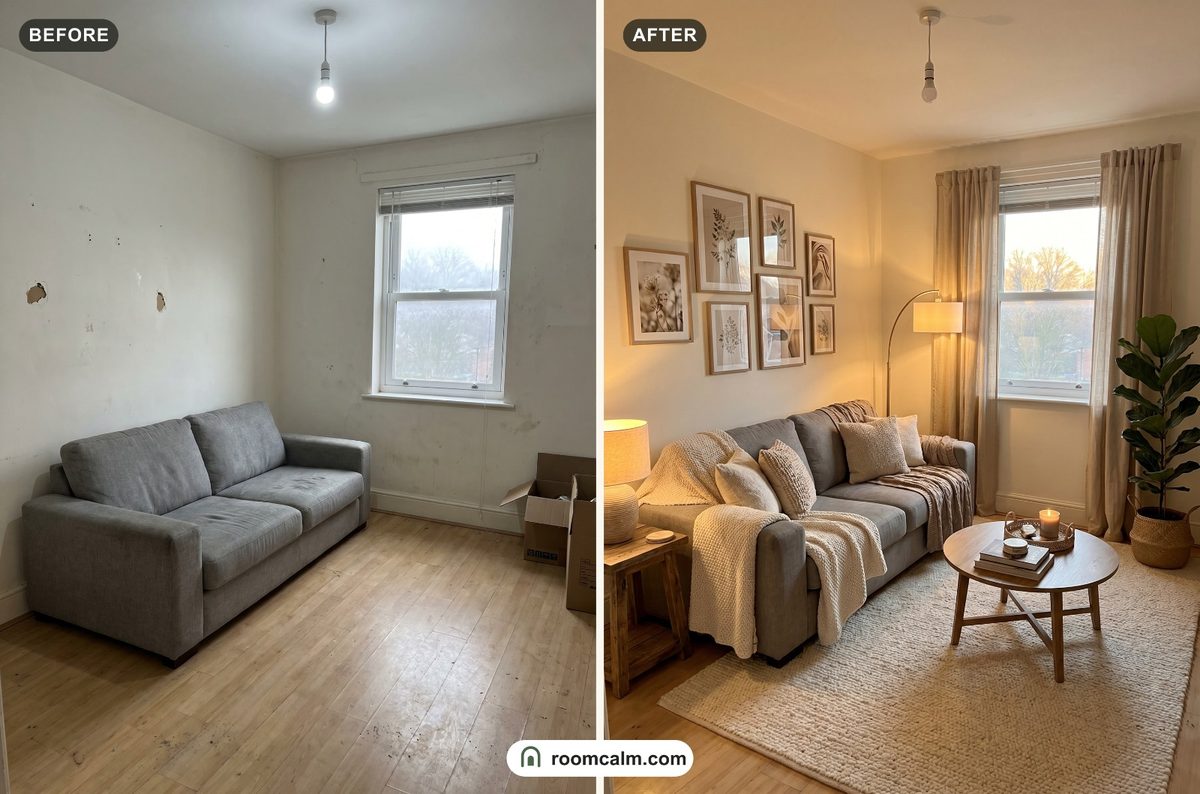
See these ideas in your own room — before you buy anything
Upload a photo of your room and RoomCalm’s AI redesigns it — keeping your actual furniture — then tells you exactly what to change, in plain English.
Redesign my room free →First redesign free · No signup
The 60-30-10 Rule
In any room: 60% dominant color (walls, large furniture), 30% secondary color (curtains, accent chairs, rugs), 10% accent color (throw pillows, art, decorative objects). This ratio creates visual balance automatically.
Room-by-Room Guide
Bedrooms: calming colors (soft blues, greens, warm neutrals). Kitchens: bright and clean (whites, light grays, warm wood tones). Living rooms: versatile and inviting (greiges, warm whites, earth tones). Bathrooms: spa-like (whites, soft greens, natural stone colors).
- Match undertones across rooms for cohesive flow throughout the home
- 60-30-10 rule: dominant, secondary, and accent colors
- Always test paint samples on the actual wall — colors shift dramatically with lighting
Color Palette for Your Home: Top Amazon Picks
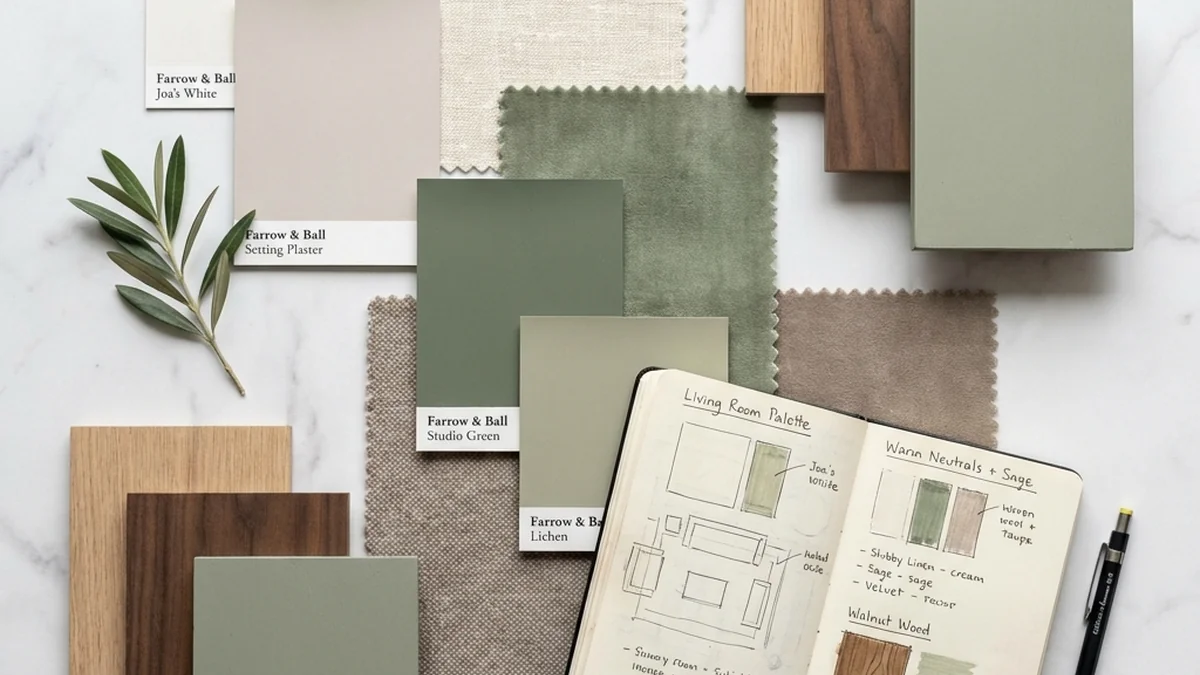
Choosing the right color palette for your home is easier with the right tools. The picks below cover everything from sample peel-and-stick paint to color decks to interior styling guides that take the guesswork out of building a cohesive color palette for your home.
Samplize Peel-and-Stick Paint Samples ($6–$12 each)
Peel-and-stick paint samples in real Benjamin Moore and Sherwin-Williams colors let you test before committing. The most-recommended way to choose a color palette for your home without painting test patches.
Shop Peel-and-Stick Paint Samples on Amazon →
Benjamin Moore Color Deck ($25–$45)
The official fan deck shows every Benjamin Moore color side by side. Essential for choosing related shades that share undertones across rooms.
Shop Benjamin Moore Color Decks on Amazon →
Sherwin-Williams Color Wheel ($15–$30)
A physical color wheel teaches you which colors work together at a glance. Useful for picking accents and complementary tones for any room.
Boucle Throw Pillows in Earth Tones ($25–$50)
Once you choose a color palette for your home, throw pillows are the easiest way to start applying it. Boucle textures in cream, terracotta, and oat work in almost any palette.
Shop Earth Tone Boucle Pillow Covers on Amazon →
Linen Curtains in Cream and Sand ($30–$80)
Curtains anchor any room to the chosen palette. Linen and linen-blend curtains in cream, oat, sand, or warm white work with virtually any color palette for your home.
Shop Linen Curtain Panels on Amazon →
Vintage-Look Area Rug ($150–$400)
An area rug grounds every color palette for your home in one piece. Vintage Persian and Moroccan-style rugs come in faded warm tones that play nicely with any neutral wall color.
Shop Vintage Area Rugs on Amazon →
Earth-Tone Vase Set ($25–$50)
Group three terracotta or sand-tone vases at varying heights for an instant accent that ties every room’s color palette together. Use on consoles, mantels, and dining tables.
Shop Earth Tone Vase Sets on Amazon →
Color Theory Book for Interior Design ($15–$25)
If you want to understand the why behind color choices, a color theory book is the best $20 you can spend. Essential reading for anyone tackling a whole-home palette.
Shop Color Theory Books for Designers on Amazon →
How to Build a Whole-Home Color Palette
Building a cohesive color palette for your home starts with one anchor room and expands from there. The process below takes most homeowners a weekend and saves years of mismatched purchases.
Step 1: Choose Your Whole-Home Neutral
Pick one warm white, cream, or greige that will be your default wall color. Sherwin-Williams Alabaster, Benjamin Moore White Dove, and Farrow and Ball Wimborne White are the three most-used safe choices.
Step 2: Pick a Hero Room
Choose your most-used room and design its full palette first. Most people choose the living room. The hero room sets the undertones for the rest of the house.
Step 3: Identify Undertones
Look at the dominant color in your hero room and identify its undertone. Warm undertones lean yellow, orange, or red. Cool undertones lean blue, green, or violet. Every other room should share the same undertone family.
Step 4: Add Accent Colors
Pick two to three accent colors that work with your hero room and undertones. Use them sparingly across all rooms in pillows, art, and accessories. The repetition is what creates flow.
Step 5: Test Before Committing
Buy peel-and-stick samples and test in every room before painting. Light changes color completely from room to room and time to time of day. A color that looks perfect in the store will look different in your space.
Color Palette Checklist
- One whole-home neutral on most walls.
- Two to three accent colors repeated across rooms.
- One bold color reserved for one or two statement spots.
- Consistent undertones (warm or cool) throughout.
- Test paint samples in actual room light.
- Repeat each color at least three times in any room.
- Use the 60-30-10 rule for visual balance.
- Consider fixed elements (floors, cabinets, stone) before paint.
- One metal finish dominates each room.
- Sample first, paint second for every room.
Color Palettes by Style
Warm Modern
Warm whites, creams, terracotta, sage green, and walnut wood. The most popular color palette for your home in 2026 and the easiest to live with.
Coastal
White, soft blue, sand, driftwood, and pale gray. Use linens and natural textures to anchor the palette. Avoid bright primaries.
Modern Farmhouse
Warm white, cream, charcoal, natural wood, and a single muted accent (sage, navy, or rust). Keep the palette tight for the cleanest look.
Scandinavian
Pure white, light wood, soft gray, and one warm pop of color (mustard, blush, or olive). Light dominates the entire palette.
Moody Traditional
Deep greens, navy, burgundy, and warm cream. The opposite of Scandinavian, this palette wraps you in saturated color and works best in libraries, dens, and dining rooms.
Common Color Palette Mistakes
Five mistakes that ruin even the most-thought-out color palette for your home:
Mistake one: too many colors. A whole-home palette of seven colors looks chaotic. Stick to one neutral, one or two main colors, and one or two accents max.
Mistake two: ignoring undertones. A warm cream wall next to a cool gray sofa fights every time. Pick a side and commit.
Mistake three: skipping samples. Buying paint based on the chip card costs hundreds in repainting. Always sample on the actual wall.
Mistake four: matching too perfectly. A room where everything matches exactly looks stiff. Aim for harmony, not identical colors.
Mistake five: forgetting fixed elements. Floors, countertops, and cabinets are part of the palette. Choose paint to work with them, not against them.
Light Affects Color More Than You Think
Light is the single most-overlooked variable in choosing paint and decor. The same color can look warm and inviting in one room and dingy or harsh in another, purely because of the light hitting it.
North-Facing Rooms
North-facing rooms get cool, indirect light all day. Cool paint colors read even cooler in this light, often turning blue or gray. Use warm paint tones (cream, warm white, soft yellow undertones) to balance the cool natural light.
South-Facing Rooms
South-facing rooms get warm, bright light most of the day. Almost any color works in south-facing rooms because the warm light flatters everything. Best for darker, moodier paint colors that would feel oppressive in a north-facing room.
East-Facing Rooms
East-facing rooms get warm morning light and cooler afternoon light. Best for living rooms used in the evening or bedrooms used in the morning. Test paint at the time of day you use the room most.
West-Facing Rooms
West-facing rooms get harsh hot afternoon light that can wash out cool colors. Use richer, saturated tones that hold their character against bright direct sun.
Artificial Light Temperature
Light bulb color temperature affects paint color as much as natural light. Warm white bulbs (2700K) make warm paint colors glow and cool paints feel dingy. Daylight bulbs (5000K) do the opposite. Match bulb color to your paint undertone for the best result.
The Importance of Sampling Paint at Home
Paint samples are non-negotiable for any color decision. The colors you see on a swatch in the store look different on your wall, in your light, against your floors and furniture. Skipping samples is the most expensive mistake in interior design.
Buy peel-and-stick samples or small sample pots of every color you are considering. Apply them to a large piece of poster board or directly to the wall in at least two spots in the room — one near the window and one in the darkest corner.
Live with the samples for at least 48 hours before deciding. Look at them in morning light, afternoon light, evening light, and artificial light. A color that looks perfect at noon may look terrible at night.
Compare samples against each other directly. Hold them next to fabrics, rugs, art, and any other elements that will share the room. Cohesive palettes only work when every element supports the others.
Never trust digital paint visualizers or photos. Screen colors are nothing like real paint on a real wall. Order physical samples for every shortlisted color, every time.