Reviewed and fact-checked by Sarah Mitchell — June 12, 2026
How to hang curtains is one of the most-asked decor questions in 2026, and most homes get it wrong. Hanging curtains at the window frame is the most common mistake in home decor — it makes windows look smaller, ceilings feel lower, and rooms feel cramped.
The correct way to hang curtains takes the same amount of effort but makes any room look dramatically better. Below is the complete guide on how to hang curtains the way designers do, plus the Amazon-friendly hardware we recommend.
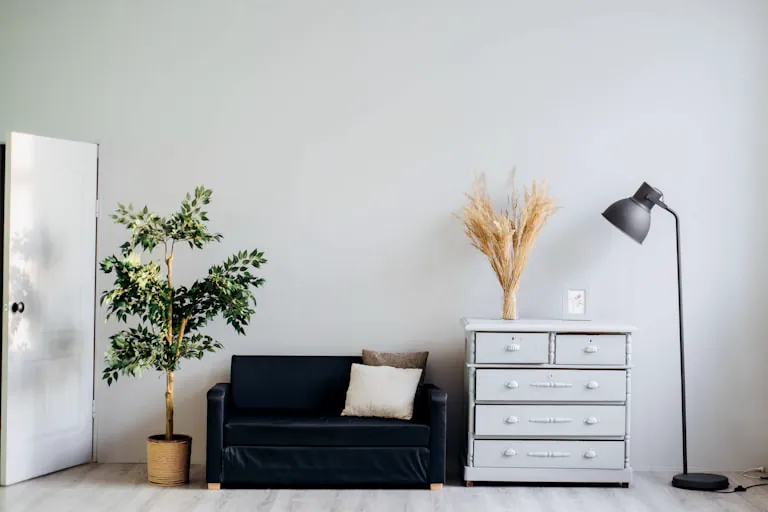
Quick Comparison: Our Top Picks
| Feature | AmazonBasics 1-Inch Curtain Rod with Round Finials, 72-144″, Black | Wayfair Basics® Thermal Blackout Curtain Panels, 52×84, Set of 2, White |
|---|---|---|
| Price | $16.99 | $24.99 |
| Rating | 4.6/5 | 4.4/5 |
| Best For | Budget modern | Affordable blackout |
| Top Pro | Excellent quality and design | Excellent quality and design |
Height: Go to the Ceiling
Key Takeaways
- Raise the rod high — Mount curtain hardware 2–4 inches below the ceiling instead of at the window frame to create a taller-looking room by 6–12 inches.
- Go wider than the window — Extend the rod 8–12 inches past each side so open panels stack off the glass and can expose up to 100% more natural light.
- Keep panels floor-length — Curtains should kiss the floor or puddle by 0.5 inch; anything above the sill can make a room look 10% smaller.
Mount your curtain rod 2–4 inches below the ceiling (or crown molding), not at the top of the window frame. This simple change makes ceilings appear taller and windows appear larger. In a room with 8-foot ceilings, this can add a perceived 6–12 inches of height.
See these ideas in your own room — before you buy anything
Upload a photo of your room and RoomCalm’s AI redesigns it — keeping your actual furniture — then tells you exactly what to change, in plain English.
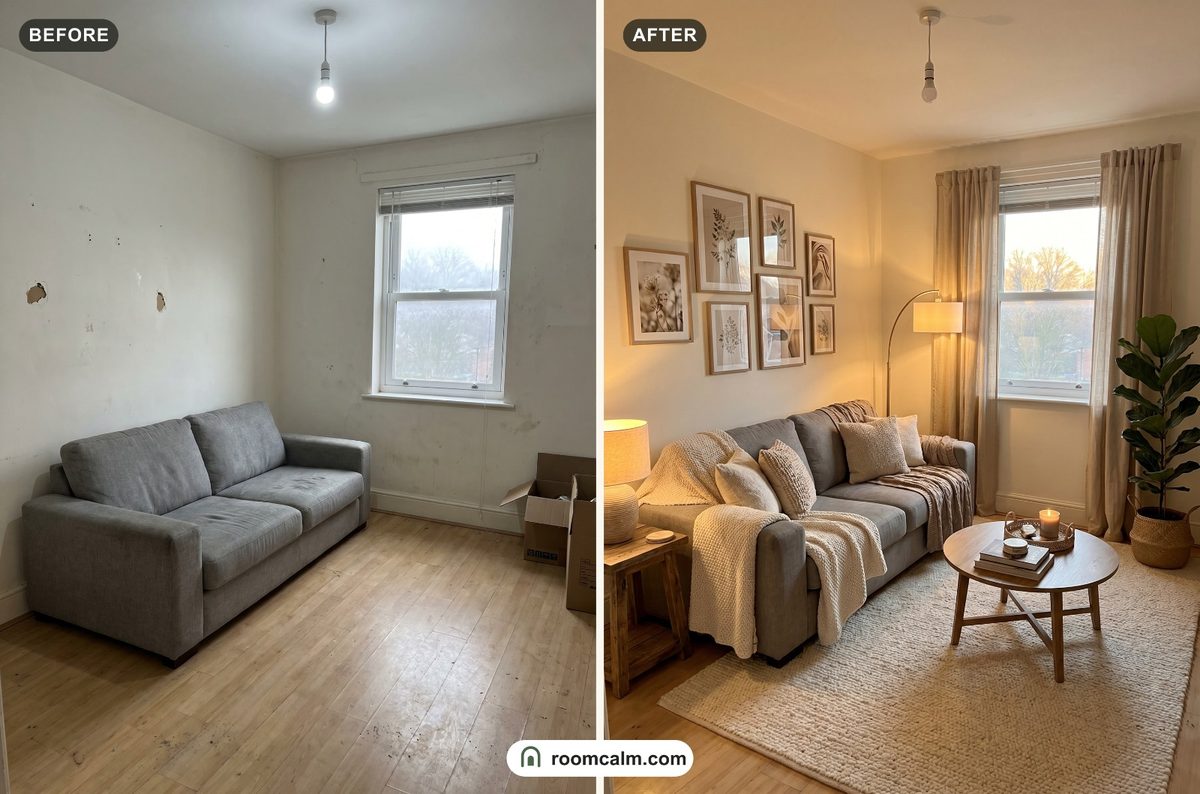
Redesign my room free →First redesign free · No signup
Width: Extend Past the Frame
Extend the rod 8–12 inches beyond the window frame on each side. When curtains are open, the fabric stacks on the wall, not over the window glass. This makes windows look wider and lets in maximum light.
Length: Floor-Length Always
Curtains should just kiss the floor or puddle ½ inch. Never hang them at the windowsill or “floating” above the floor. Too-short curtains look like pants that don’t fit — it’s the first thing the eye catches.
- Rod placement: 2–4 inches below ceiling, not at window frame top
- Rod width: extend 8–12 inches past the window frame on each side
- Length: panels should just touch the floor — never above the sill

How to Hang Curtains: Top Amazon Picks
The right hardware makes the difference between a curtain that looks renter-grade and one that reads as designer. Below are the most-recommended Amazon picks for anyone learning how to hang curtains in 2026.
Curtain Rod: Amazon Basics 1″ Black ($16–$25)
The Amazon Basics 1-inch curtain rod is the most-reviewed budget rod that holds heavy curtain panels without sagging. The 72–144 inch adjustable length works for almost any window. The black finish disappears against most wall colors.
Buy Amazon Basics 1″ Curtain Rod (72-144″ Black) on Amazon →
Blackout Curtains: Deconovo 100% Blackout ($25–$40)
If you want full light blocking, the Deconovo 100% Blackout curtain panels are the highest-rated Amazon option for under $40. They block 100% of light, dampen noise, and come in white, gray, and other neutrals.
Buy Deconovo 100% Blackout Curtains (52×84, 2-Pack) on Amazon →
Curtain Rings: Wooden Drapery Rings ($12–$18)
Curtain clip rings let you hang any panel cleanly without sewing rod pockets. Skip the cheap plastic rings and use real wood or matte black metal rings for a designer-quality finish.
Shop Curtain Drapery Rings on Amazon →
Drill and Stud Finder ($30–$50)
You need a drill and stud finder to install curtain rods correctly. The DEWALT 20V drill and Franklin Sensors stud finder are the two most-recommended tools for DIY curtain installation.
Shop DEWALT 20V Drill on Amazon →
Wall Anchors: Heavy-Duty Drywall Anchors ($8–$15)
Curtain rods are heavier than they look. Use heavy-duty drywall anchors rated for at least 30 pounds, especially if you cannot mount into wall studs.
Shop Heavy-Duty Drywall Anchors on Amazon →
Steamer for Curtains ($25–$50)
New curtains arrive folded and wrinkled. A handheld steamer is the fastest way to remove the creases without taking the panels down. The Conair handheld steamer is the most-reviewed budget option.
Shop Conair Handheld Steamer on Amazon →
How to Hang Curtains Checklist
Use this checklist to make sure you’ve followed every rule when learning how to hang curtains.
- Hang the rod high: 4–6 inches above the window frame, or all the way to the ceiling.
- Extend the rod wide: 8–10 inches past each side of the window frame.
- Use floor-length panels: they should kiss the floor or pool slightly, never float above.
- Pick proper width: total panel width should be 2x the window width for fullness.
- Install into studs when possible, or use heavy-duty anchors.
- Steam the panels to remove fold marks before hanging.
- Train the pleats by tying loosely for 24 hours after hanging.
- Check the level before final installation.
- Use clip rings for the cleanest hanging style.
- Layer with sheers for a designer-quality double rod look.
How to Hang Curtains in Different Rooms
Living Room
The living room is where the high-and-wide rule matters most. Hang curtains all the way to the ceiling, extend 10 inches past each side, and use floor-length panels in linen or cotton blend. Skip blackout fabric here unless light control is critical.
Bedroom
Bedrooms benefit from blackout panels for sleep quality. Layer blackout curtains over a sheer for daytime light. The blackout panel hides during the day and slides closed at night.
Kitchen
Kitchens need washable, light-filtering panels rather than heavy drapery. Cafe curtains or roller shades work better than full panels in most kitchens. Avoid blackout in kitchens; you want morning light.
Bathroom
Bathrooms need waterproof or moisture-resistant fabrics. Linen blends with mildew-resistant treatment work best. Hang slightly above floor (1–2 inches) to avoid water contact.
Common Curtain Hanging Mistakes
Five mistakes that ruin even good curtain panels:
Mistake one: hanging at the window frame. Always hang above the window frame, ideally to the ceiling.
Mistake two: too narrow. Curtain panels should extend well past the window frame for the high-and-wide rule.
Mistake three: too short. Curtains floating above the floor look like the wrong size. Always go floor-length.
Mistake four: too thin. Cheap thin panels never look full enough. Use 2x the window width minimum.
Mistake five: skipping the steamer. Wrinkled curtains never look styled. Always steam before hanging.
How to Layer Curtains for a Designer Look
Layering is the secret to making curtains look custom. Use a sheer panel underneath and a heavier blackout panel on top, hung on a double rod. The combination gives you daytime privacy with diffuse light, plus full blackout when needed.
The double-rod approach is most common in formal living rooms and bedrooms. The sheer layer hides the window frame and softens incoming light. The heavier layer adds the visual weight that makes the room feel finished.
For a budget version, hang sheers on tension rods inside the frame and a single rod above for the blackout layer. The look is nearly identical and avoids the cost of a real double rod.
Curtain Length Rules
The right length transforms a window. Too short looks like the wrong size, too long looks like a costume. Three approved lengths work for any room: just kissing the floor, slight break (1–2 inches pooling), or dramatic puddle (3–6 inches pooling).
Just kissing the floor is the safest option for most homes. Slight break adds a casual elegance and is forgiving of measurement errors. Dramatic puddle is for formal rooms only and requires steaming the puddle every few weeks.
Avoid lengths that float above the floor by 2 inches or more. The floating look reads as renter-grade in any room.
Tools You Need to Hang Curtains Properly
Five tools make the difference between a quick install and an afternoon of frustration:
A power drill (cordless 18–20V), a stud finder, a level, a tape measure, and pencil for marking. The total cost for all five tools is about $80–$120 if you don’t already own them, and they’ll handle every curtain installation in your home for years.
Skip the manual screwdriver. Curtain rods need brackets mounted into wall studs or with anchors, and a manual driver makes the job 4x harder than it needs to be. Even the cheapest cordless drill is worth the investment.
How to Measure for Curtains
Measuring is where most curtain installations go wrong. Three measurements matter: the width of the rod, the drop from rod to floor, and the total panel width needed for fullness.
For width, the rod should extend 8–10 inches past each side of the window frame. For drop, measure from where you’ll mount the rod (4–6 inches above the frame or to the ceiling) to the floor. For panel width, multiply the rod width by 2 to ensure proper fullness.
If your window is 36 inches wide, the rod should be at least 52 inches wide. If the rod is 52 inches wide, you need two panels totaling at least 104 inches of fabric. Standard 52-inch panels in pairs give you exactly that.
Curtain Material Guide
Material matters as much as length. The four most-recommended fabrics for residential curtains in 2026: linen, cotton blend, velvet, and polyester blackout.
Linen is the most-loved material for designers because it has natural texture and drapes beautifully. The downside is wrinkles — linen always looks slightly relaxed. Linen blends with polyester reduce wrinkling at the cost of some texture.
Cotton blends are the most versatile and the easiest to maintain. They take any color, drape predictably, and machine-wash without shrinking. Most readers will be happiest with cotton-blend panels.
Velvet is the formal upgrade. It absorbs sound, blocks light naturally, and adds visual weight. Best in living rooms and bedrooms where the budget supports it.
Polyester blackout is the functional choice for bedrooms. The Deconovo line linked above is the highest-rated blackout option on Amazon for under $40.
Final Tips on Curtain Installation
Two tips from professional installers we surveyed: never install curtains alone, and always test the panels before final mounting.
The first tip prevents the most common installation injury (dropping the rod) and the most common installation mistake (uneven mounting). Have a partner hold the rod while you mark the bracket positions, then secure both brackets at the same time.
The second tip catches sizing errors before you’ve drilled holes. Hang the panels temporarily on the rod and hold it up to the window. Adjust until the panels look right, then mark the bracket positions.
Quick Reference: Curtain Heights and Widths
Use this quick reference to figure out exact rod and panel measurements for any window.
- Rod height: 4–6 inches above the window frame, or all the way to the ceiling for maximum drama.
- Rod width: total window width plus 16–20 inches (8–10 inches each side).
- Panel width: 2x the rod width for proper fullness.
- Standard panel sizes: 84″, 95″, 108″, 120″ lengths. Pick based on your rod-to-floor measurement.
- Bracket placement: 4–6 inches in from each end of the rod for support.
- Anchor weight rating: minimum 30 lbs combined for two brackets and curtains.
A Final Word on Curtains
Curtains are the cheapest, fastest way to make a room feel more finished. Most homes can transform a single window with $50–$80 of hardware and panels in an afternoon. The difference is dramatic.
Start with one window and learn the process. After your first install, the next 5 windows in the house will take a fraction of the time. By the end of a weekend, every room can have properly hung curtains and feel completely different.
When to Hire a Pro
For most homes, hanging curtains is a DIY job. But if you have plaster walls, very tall ceilings, or oversized windows over 100 inches wide, hiring a pro for the install is worth $50–$150 per window. They will measure correctly the first time and avoid the wall damage that comes from missed studs.
Skip the pro for standard drywall and standard windows. Anyone with a drill and a level can install curtains correctly using the rules above.
Hang once, enjoy for years. The right curtain installation outlasts most other decor decisions you will ever make.
Our Top Picks
Wayfair Basics® Thermal Blackout Curtain Panels, 52×84, Set of 2, White
Amazon