Reviewed and fact-checked by Sarah Mitchell — May 29, 2026
Interior design styles in 2026 are easier to choose between when you understand the core principles behind each one. The most popular interior design styles — modern, Scandinavian, boho, traditional, and farmhouse — each follow distinct rules that make confident decorating possible.
Most homes are not purely one style, they blend elements. The key is knowing which interior design styles mix well and which clash. Below is the complete guide plus the Amazon picks we recommend for each style.
Quick Comparison: Our Top Picks
| Feature | Phaidon "Interiors: The Greatest Rooms of the Century" Book | Kelly Clarkson Home Boho Tufted Accent Pillow, Cream, 18×18 |
|---|---|---|
| Price | $39.95 | $29.99 |
| Rating | 4.8/5 | 4.4/5 |
| Best For | Premium reference | Affordable layering |
| Top Pro | Excellent quality and design | Excellent quality and design |
Modern
Key Takeaways
- Build around 3 to 5 repeat colors — repeating the same palette across furniture, textiles, and decor is the fastest way to make mixed styles feel unified.
- Use the 2/3 wall rule — wall art should cover roughly two-thirds of the space above furniture so proportions look intentional, not undersized.
- Mix at least 3 textures — pairing smooth ceramics, woven fibers, and velvet or linen creates more depth than adding 5 extra colors.
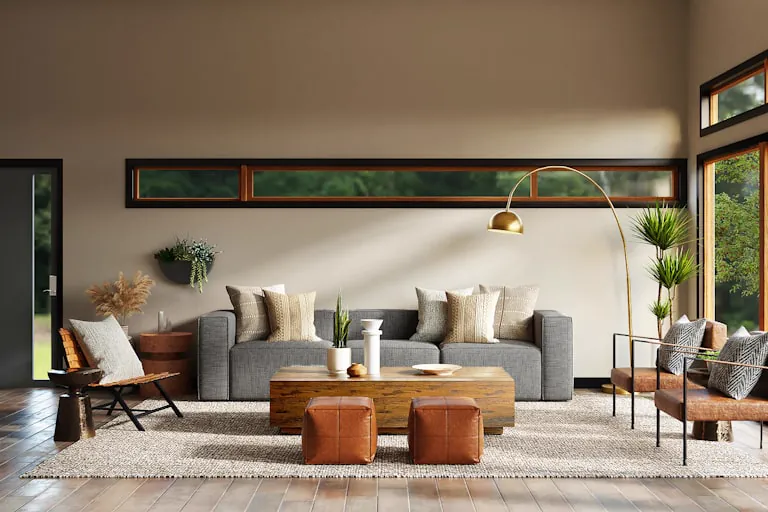
Clean lines, minimal ornamentation, neutral palette with bold accent pieces. Think low-profile furniture, open floor plans, and intentional negative space. Materials: steel, glass, concrete, and smooth leather.
See these ideas in your own room — before you buy anything
Upload a photo of your room and RoomCalm’s AI redesigns it — keeping your actual furniture — then tells you exactly what to change, in plain English.
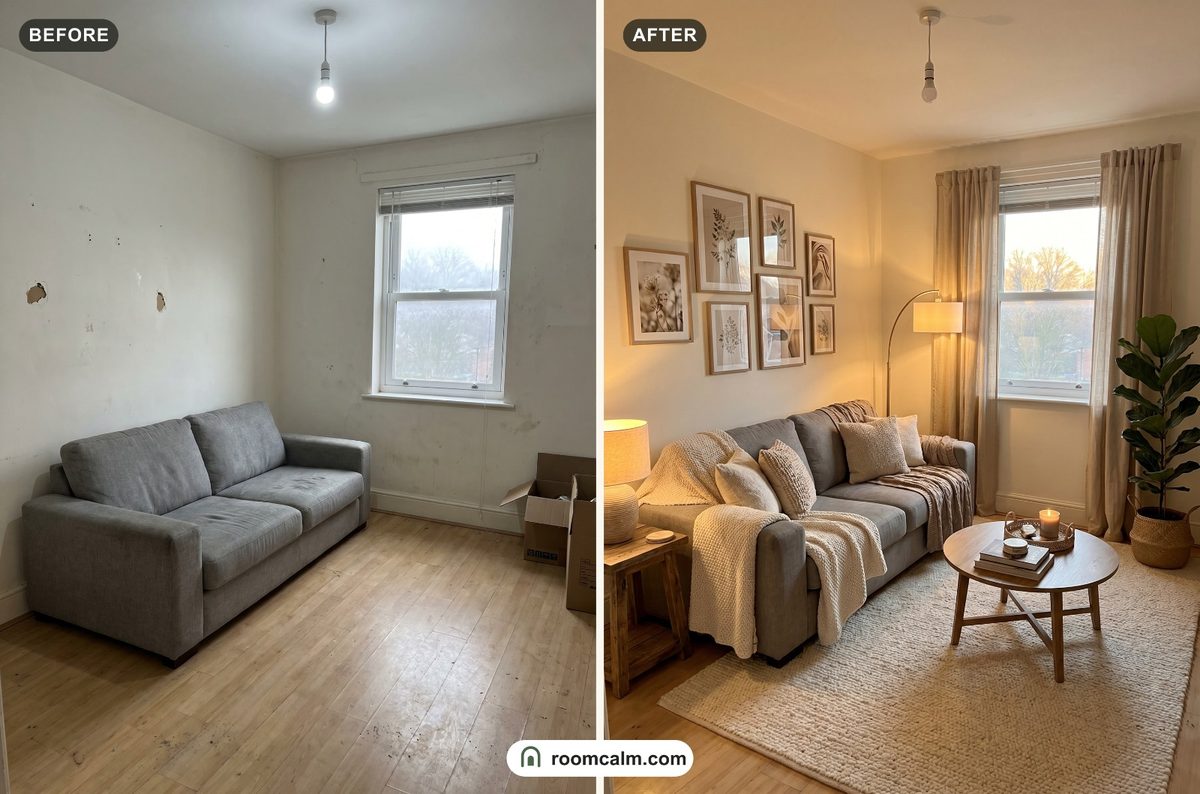
Redesign my room free →First redesign free · No signup
Scandinavian
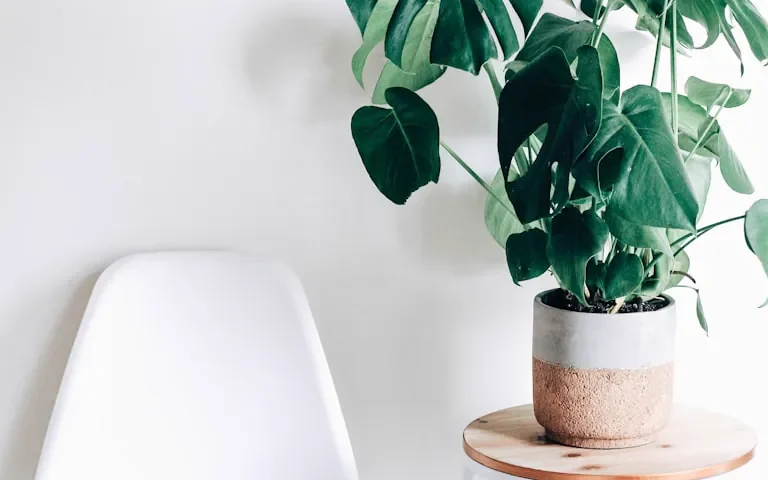
Function-first design with warmth. Light woods (oak, birch), white walls, cozy textiles (sheepskin, chunky knits), and greenery. The goal is a room that feels bright, calm, and hygge (cozy). Scandi and Modern blend seamlessly.
Boho/Bohemian
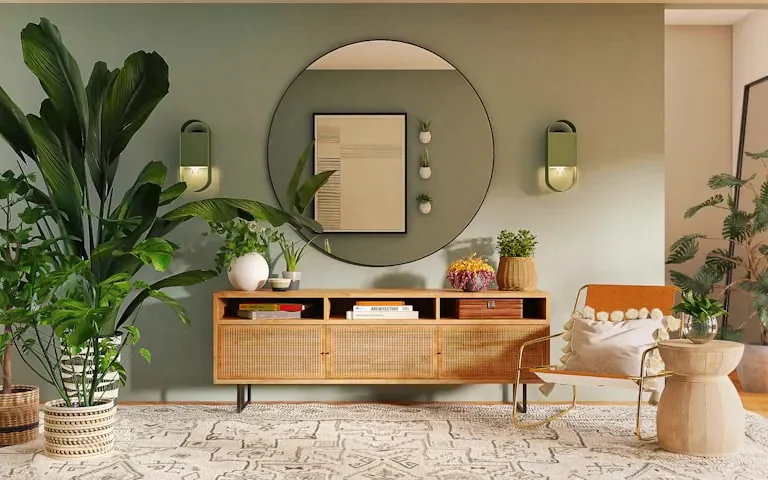
Layered textures, global influences, collected-over-time aesthetic. Macramé, rattan, vintage rugs, plants everywhere. Color palette is earthy with pops of jewel tones. The opposite of minimalism — more is more, but with intention.
Traditional
Symmetry, rich wood tones, classic furniture silhouettes, and elegant fabrics like velvet and silk. Crown molding, wainscoting, and architectural details. Color palette leans toward deep blues, greens, burgundy, and warm neutrals.
- Modern + Scandinavian: the most natural pairing — both value clean lines
- Boho + Traditional: “grandmillennial” style — vintage charm with layered warmth
- Modern + Boho: “California casual” — clean bones with layered, relaxed accessories
Related Articles You Might Enjoy
Continue exploring HomeDecoria for more expert guides and product recommendations:
- How to Style a Bookshelf: 7 Designer Tricks That Work in Any Home
- How to Hang Curtains the Right Way (Most People Do It Wrong)
Interior Design Styles: Our Expert Verdict
When it comes to interior design styles, the options in 2026 are better and more accessible than ever. We have researched and reviewed the top interior design styles picks to help you save time and money. For the best results with interior design styles, focus on quality over quantity and choose pieces that work with your existing space and personal style.
Our interior design styles recommendations above represent the best value across every price range. Bookmark this interior design styles guide and revisit it whenever you are ready to shop — we update our picks regularly as new products become available and prices change.
Interior Design Styles: Top Amazon Picks for Each
The Amazon picks below represent each of the major interior design styles in a single accessible piece. Each is the highest-rated example you can buy today and start incorporating into a room.
Modern: Linear Black Floor Lamp ($60–$120)
A clean-lined matte black arc or linear floor lamp is the iconic accessory of modern interior design styles. Pair with neutral textiles and minimal accessories.
Shop Modern Arc Floor Lamps on Amazon →
Scandinavian: Light Oak Side Table ($80–$180)
Light oak wood is the foundation of Scandinavian interior design styles. A simple round side table in pale oak captures the look in one piece.
Shop Light Oak Side Tables on Amazon →
Boho: Rattan Pendant Light ($60–$140)
A natural rattan pendant light is the breakout boho piece. The texture, organic shape, and warm light all hit the boho aesthetic at once.
Shop Rattan Pendant Lights on Amazon →
Traditional: Brass Picture Frame Set ($25–$60)
A set of ornate brass picture frames is the easiest entry into traditional interior design styles. Group on a console table or use for a formal gallery wall.
Shop Brass Picture Frame Sets on Amazon →
Farmhouse: Wood Dough Bowl Centerpiece ($30–$60)
A long oval wood dough bowl is the iconic farmhouse centerpiece. Fill with greenery, pinecones, or ornaments seasonally for the staple look.
Shop Wood Dough Bowl Centerpieces on Amazon →
Industrial: Metal Pipe Wall Shelves ($40–$90)
Black metal pipe wall shelves with reclaimed wood planks anchor the industrial look. Mount in a stair-step or grid pattern for the warehouse-inspired feel.
Shop Industrial Pipe Wall Shelves on Amazon →
Coastal: Rope and Glass Pendant ($50–$120)
A rope-wrapped or coastal-inspired pendant light captures the coastal aesthetic. Pair with white linen, woven baskets, and weathered wood for the full look.
Shop Rope Pendant Lights on Amazon →
Mid-Century Modern: Walnut Sputnik Chandelier ($120–$300)
A walnut and brass sputnik chandelier is the iconic mid-century modern light fixture. Pairs with tapered-leg furniture and warm wood tones.
Shop Sputnik Chandeliers on Amazon →
The Major Interior Design Styles Compared
Each of the major interior design styles has a clear set of rules. Once you know the rules, you can mix styles confidently. Below is a side-by-side breakdown of the most popular styles.
Modern
Clean lines, neutral palette, minimal ornamentation, lots of negative space. Uses materials like glass, steel, leather, and matte-finish wood. Reads sleek and uncluttered.
Contemporary
Often confused with modern but technically refers to “what is current right now.” In 2026, contemporary leans warm with curves, texture, and a softer palette than modern.
Scandinavian
Light woods, white walls, natural textures, hygge-driven warmth. Combines minimalism with cozy textiles and natural materials. The most universally liked of the interior design styles.
Boho
Layered patterns, mixed cultures, vintage finds, natural textures, plants. The opposite of minimalism. Reads collected over time and personal.
Mid-Century Modern
1950s and 1960s aesthetic with tapered legs, walnut wood, retro silhouettes, and clean curves. Bold accent colors against warm neutrals.
Industrial
Exposed brick, metal pipes, factory-inspired lights, raw wood, leather. Reads urban loft. Most successful when combined with softer textiles to balance the hard edges.
Farmhouse and Modern Farmhouse
White walls, shiplap, vintage signs, weathered wood, galvanized metal. Modern farmhouse swaps the country kitsch for cleaner lines and a more restrained palette.
Traditional
Classic furniture shapes, ornate detailing, warm wood, formal symmetry, layered textiles. Reads timeless and inherited.
Transitional
The blend of traditional and contemporary. Classic shapes with modern finishes and a neutral palette. The safest of the interior design styles for resale.
Coastal
White, blue, and sand palette. Natural textures like rope, jute, weathered wood, and linen. Reads relaxed and beachy without being kitschy when done well.
Interior Design Styles Checklist
- Pick one dominant style for your home as a whole.
- Mix in one or two complementary styles for personality.
- Repeat key materials and colors across rooms for cohesion.
- Match scale to the room and furniture proportions.
- Avoid mixing more than three styles in any single room.
- Use one anchor piece per room as the style declaration.
- Layer textures regardless of style choice.
- Add personal touches that go beyond any style template.
- Honor your home’s architecture when choosing styles.
- Edit ruthlessly to avoid style chaos.
Which Interior Design Styles Mix Well
Some style combinations create harmony. Others fight each other. Below is a quick guide to which interior design styles mix well together.
Modern + Scandinavian = “Scandi Modern”
The most popular blended style today. Combines modern’s clean lines with Scandinavian’s warm woods and cozy textiles. Universally liked and easy to achieve.
Modern + Industrial = “Modern Industrial”
Modern’s clean lines balance industrial’s rough edges. Use a clean modern sofa with raw metal and reclaimed wood accents. Works in lofts and converted spaces.
Boho + Mid-Century = “Boho Mid-Century”
Mid-century’s clean shapes ground boho’s eclectic textures. The result reads collected and personal without feeling chaotic.
Traditional + Modern = “Transitional”
The classic blend. Traditional shapes with modern finishes and a restrained palette. The safest mix for resale homes and family use.
Farmhouse + Industrial = “Modern Farmhouse”
Country textures with industrial accents. Reclaimed wood and metal pipe shelving in a kitchen with white shiplap walls. The most-pinned blend on Pinterest.
Common Style Mistakes
Five mistakes when choosing among interior design styles:
Mistake one: chasing trends. Picking a style because it is trending leaves you with a dated home in five years. Choose timeless styles that fit your life.
Mistake two: forcing a style on the wrong house. A mid-century modern style in a colonial house feels off. Honor the architecture of your home.
Mistake three: too many styles in one room. Three styles is the maximum for any single space. More than that reads chaotic.
Mistake four: copying a magazine room exactly. Magazine rooms are staged. Real homes need to function. Adapt the inspiration to your life.
Mistake five: ignoring scale. A massive farmhouse table in a tiny dining room kills the room regardless of style. Scale always wins.
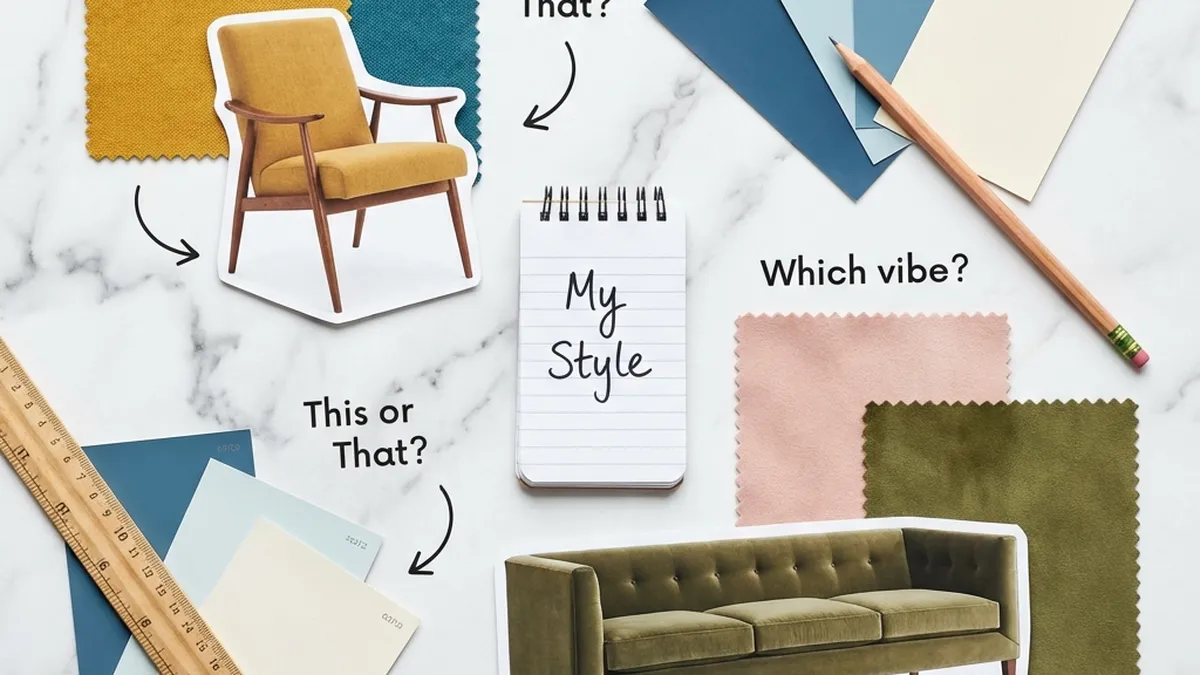
How to Identify Your Personal Style
Most people resist committing to a style because they like elements of many. The trick is identifying which style you gravitate toward most often, then layering one or two complementary styles for personality.
Spend 30 minutes on Pinterest and save every room photo you love. After 50 saves, look for patterns. The style that appears most often is your dominant style. The other elements are your accents.
Pay attention to what you notice in friends’ homes. If you always comment on a particular type of piece or feel, that is the style your eye is drawn to instinctively.
Start with what you already own. Most people have unconsciously bought items in one or two styles their whole lives. Build from those rather than starting over from scratch.
Our Top Picks
Phaidon "Interiors: The Greatest Rooms of the Century" Book
Amazon
The definitive visual reference for understanding interior design styles. Seeing 400 pages of real rooms across every style is worth more than any Pinterest board.
- ✓ 400+ pages of iconic interior design
- ✓ Covers every major design style and era
- ✓ Coffee table display piece
- ✗ Heavy — 5+ lbs
- ✗ Photography skews toward high-end, not everyday homes
Kelly Clarkson Home Boho Tufted Accent Pillow, Cream, 18×18
Amazon
A single pillow that embodies the boho style discussed in this guide. The hand-tufted texture is the signature element that defines bohemian decor.
- ✓ Handcrafted tufted texture
- ✓ Demonstrates boho style perfectly
- ✓ Neutral cream works across styles
- ✗ Spot clean only
- ✗ Insert included but could be fuller
Stop guessing — see your room redesigned before you spend a dollar
Try RoomCalm free →First redesign free · No signup · Keeps your actual furniture