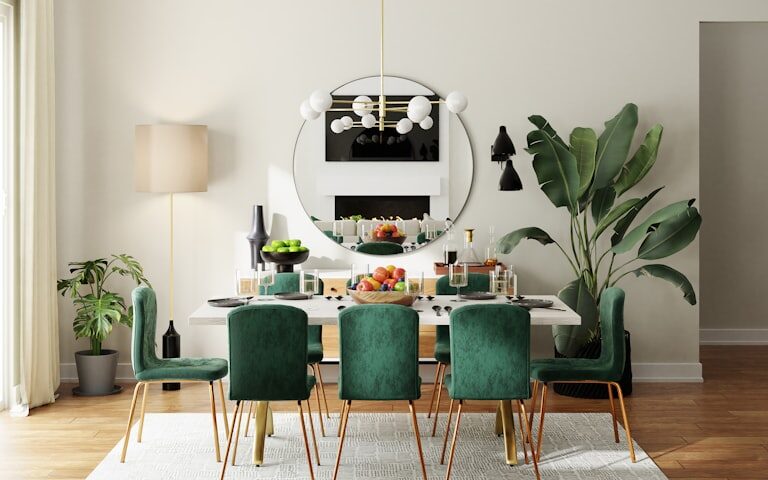
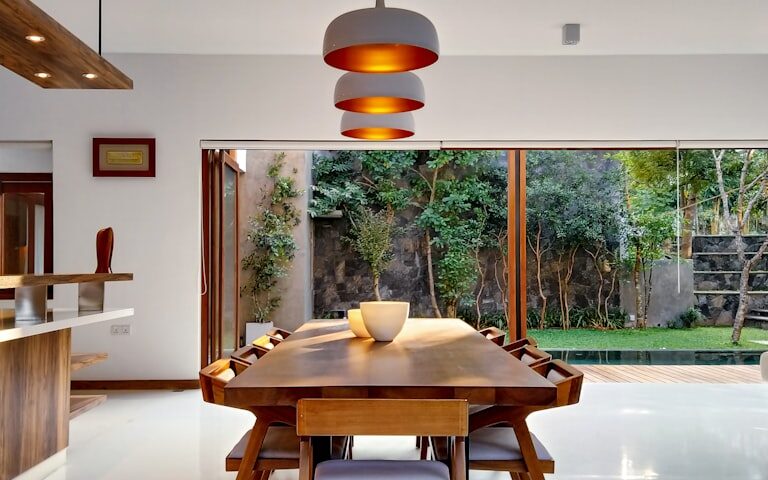
Why This Guide Exists (And Why Most Rooms Feel Wrong)
You’ve felt it before. You walk into a living room that cost someone a small fortune to furnish, and something is off. The sofa is too deep for the space. The dining table crowds the kitchen island. A bedroom that photographs beautifully on Instagram makes you feel vaguely anxious when you actually stand in it.
That feeling isn’t subjective taste. It’s spatial math.
Most homeowners — and honestly, more designers than we’d like to admit — work backwards. They fall in love with a piece, a palette, a Pinterest board, and then try to force the room to cooperate. The room never cooperates. Rooms are governed by proportions, clearances, and circulation paths that don’t care about your mood board. Get those wrong and no amount of styling will fix the result. You’ll just have an expensive room that quietly irritates everyone who uses it.
This guide is the antidote to that. We’ve built it as a single, comprehensive reference for the dimensional foundations underneath every well-designed room. If you’re already exploring the latest 2026 home decor trends, this guide gives you the spatial framework to actually execute them.
The 2026 Design Philosophy: Structured Flexibility
The pandemic-era obsession with open-concept living has matured. We spent five years knocking down walls, merging kitchens into living rooms, and calling it “flow.” Then we discovered that a home with no boundaries is a home where every activity bleeds into every other activity.
The real 2026 macro-trend isn’t open or closed. It’s a home that can be both.
We’re calling it Structured Flexibility. The idea is straightforward: design each space so it holds its own as a defined room with clear purpose, but build in the spatial intelligence to let boundaries shift when life demands it. A dining room that absorbs into the living space for a dinner party of twelve, then reconstitutes itself by Tuesday.
To pull this off, you can’t just guess. You must know your numbers. Let’s start with the room where most spatial mistakes happen.
1. The Living Room: Anchor Layouts & Clearances
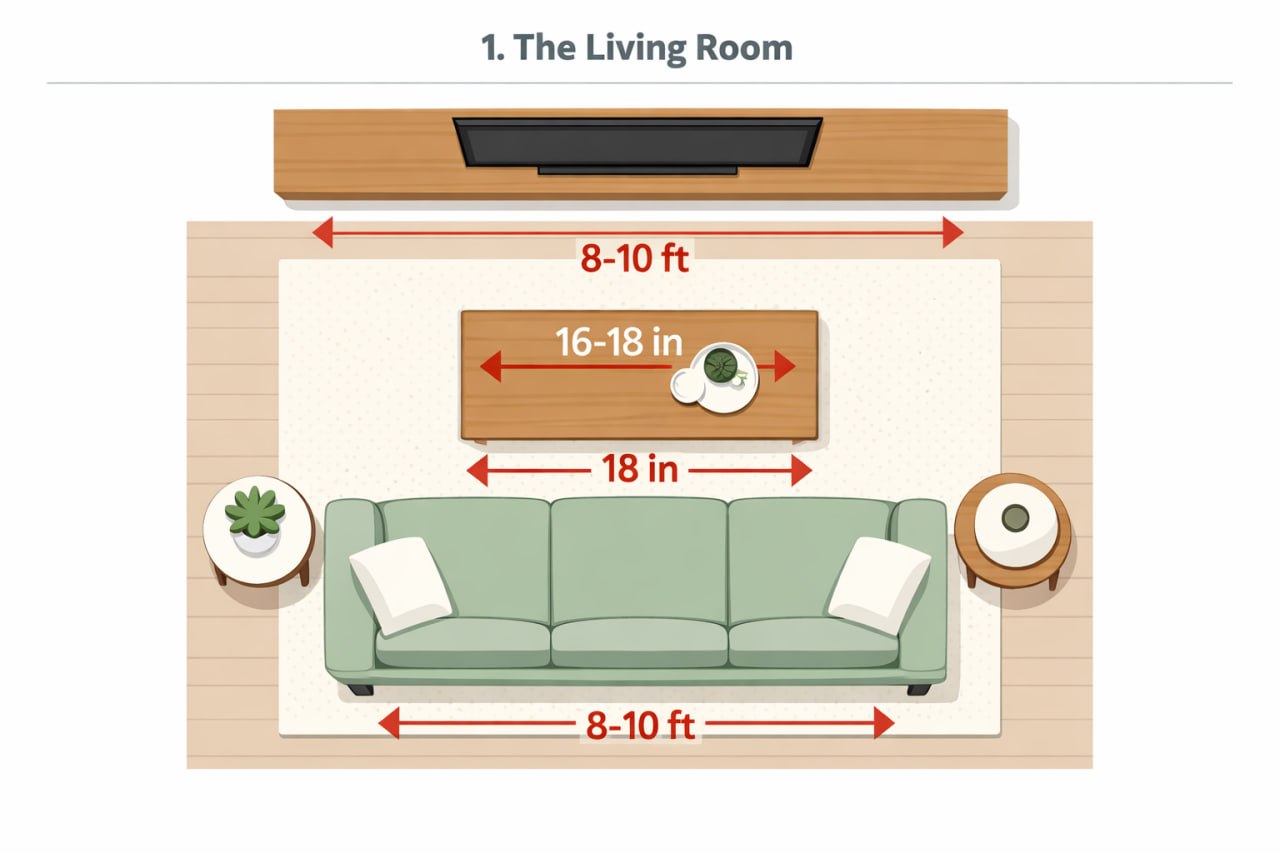
A flexible living room still needs to respect fixed dimensional principles. A conversation grouping falls apart beyond 8 feet of separation whether the room is open-plan or enclosed. If you’re working with a tight space, our small living room layout guide covers specific strategies for rooms under 200 square feet.
Here are the industry-standard measurements based on guidelines from leading ergonomic centers, including the Whole Building Design Guide (WBDG).
Living Room Spatial Standards
| Furniture Relationship | Minimum Clearance | Optimal Comfort | Flexibility Notes |
|---|---|---|---|
| Coffee Table to Sofa | 14 inches | 16 – 18 inches | Allows easy reach for drinks but enough room to walk past. |
| Main Walkway / Traffic Flow | 30 inches | 36 – 48 inches | 36″ is the minimum for clear passage without turning sideways. |
| Distance Between Seating | 3 feet | 4 – 8 feet | Maximum 8 feet to maintain intimate conversation zones. |
| TV Viewing Distance | 1.5× screen diagonal | 2× screen diagonal | Example: A 65″ TV should be placed roughly 10.5 feet away. |
| Area Rug Border | 12 inches from wall | 18 – 24 inches | Front legs of all major seating should sit on the rug. |
2. The Dining Room: Flow and Function
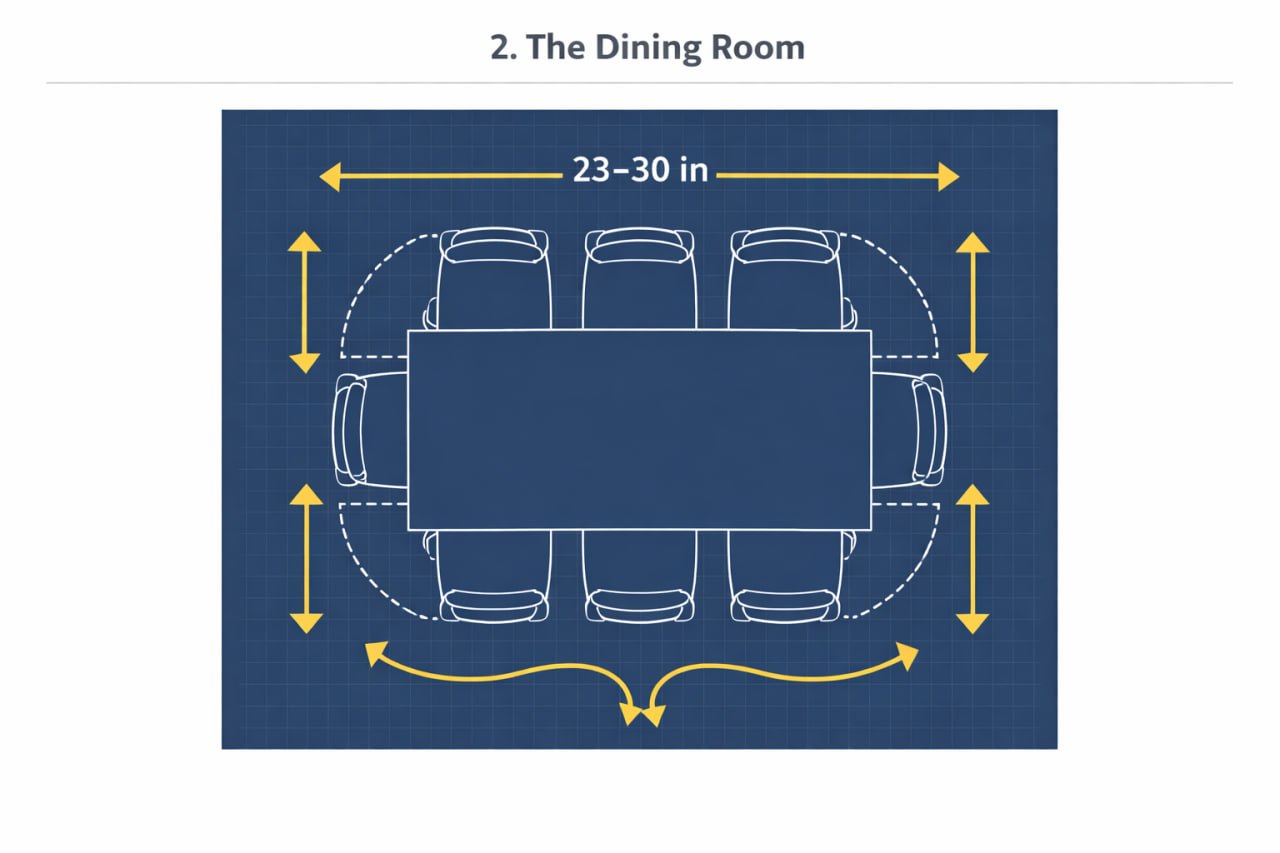
The dining room is heavily impacted by movement. The space isn’t just about the table; it’s about how bodies move around the table when chairs are pulled out. According to studies on the Psychology of Home Decor, cramped dining spaces create subconscious tension among guests. For more ideas on creating a welcoming dining space, check out our dining room decor ideas for 2026.
Dining Room Spatial Standards
| Room Element | Minimum Clearance | Optimal Comfort | Flexibility Notes |
|---|---|---|---|
| Table to Wall / Furniture | 36 inches | 42 – 48 inches | Essential for allowing someone to walk behind a seated guest. |
| Space Per Person at Table | 22 inches width | 24 – 28 inches width | 24″ prevents elbows from touching while eating. |
| Chair Pull-Out Space | 24 inches behind | 36 inches behind | Measure from the edge of the table backwards. |
| Chandelier Height | 30″ above table | 36″ above table | Add 3 inches of height for every foot of ceiling above 8 feet. |
3. The Kitchen & Concealed Pantry: The Engine Room
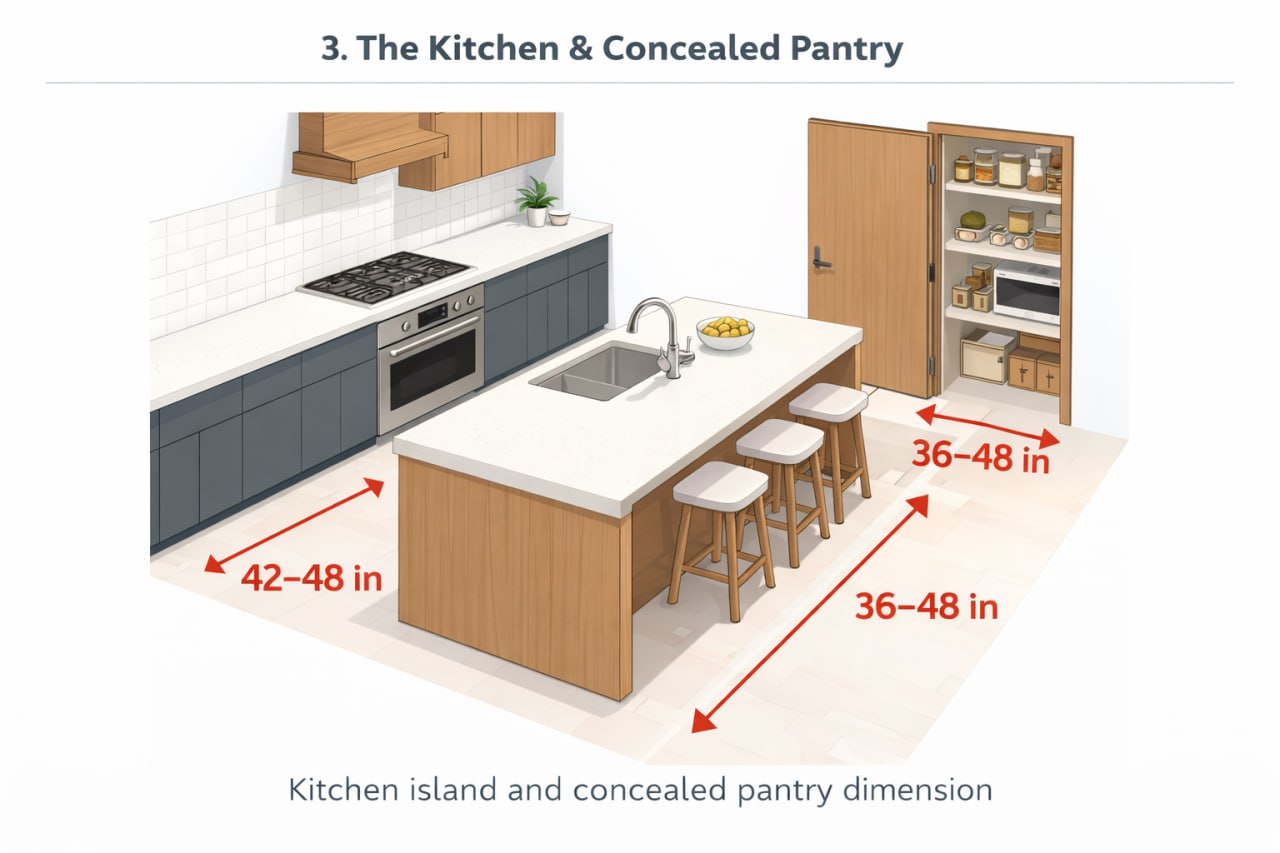
In 2026, the kitchen is all about discreet utility — think concealed pantries and appliance garages. We base our kitchen metrics on the rigorous standards set by the National Kitchen and Bath Association (NKBA). If you’re also planning a visual refresh, our guide to kitchen backsplash trends for 2026 pairs well with these layout fundamentals.
Kitchen & Pantry Spatial Standards
| Work Zone | Minimum Clearance | Optimal Comfort | Flexibility Notes |
|---|---|---|---|
| Primary Work Aisle | 42 inches | 48 – 54 inches | 48″ is required if two people cook simultaneously. |
| Work Triangle Perimeter | 12 feet total | 18 – 22 feet total | The distance between stove, sink, and fridge. |
| Island Seating Overhang | 12 inches | 15 – 18 inches | 15″ provides adequate knee space for standard bar stools. |
| Concealed Pantry Aisle | 36 inches | 42 – 48 inches | Allows room to bend down and retrieve items from lower shelves. |
| Countertop to Upper Cabinets | 15 inches | 18 inches | 18″ is standard to fit blenders, stand mixers, and coffee makers. |
The Golden Rule of Dimension
If there is one takeaway from this guide, let it be this: Measure twice, buy once.
Whether you are designing a high-end architectural remodel or simply rearranging your rental apartment for better flow, adhering to these standard dimensions will immediately elevate the feel of your home from chaotic to curated.