Reviewed and fact-checked by Sarah Mitchell — June 12, 2026
How to style a bookshelf is one of the most common questions in interior design. A well-styled bookshelf looks effortless, but it is actually carefully arranged. The difference between a curated shelf and a cluttered one comes down to seven principles every designer uses.
Below is the complete guide to how to style a bookshelf using those seven rules, plus the Amazon-friendly accessories we use most often. Each pick costs under $50 and works on any bookshelf style.
Quick Comparison: Our Top Picks
| Feature | MyGift Modern Brass Geometric Bookends, Set of 2 | Gracie Oaks Decorative Wood Bead Garland, 41", Natural |
|---|---|---|
| Price | $21.99 | $14.99 |
| Rating | 4.4/5 | 4.5/5 |
| Best For | Budget modern | Natural layering |
| Top Pro | Excellent quality and design | Excellent quality and design |
1. Remove Everything First
Key Takeaways
- Start with a full reset — empty every shelf first and only return items you truly want to display, with at least 1 intentional object per shelf zone.
- Protect 20–30% negative space — leaving roughly 1/5 to 1/3 of each shelf open makes books and decor look curated instead of overcrowded.
- Style in 3–5 item vignettes — grouping books, art, and accessories in odd-numbered clusters creates a more balanced look across shelves 1 through 7.
Start with empty shelves. Edit your collection before you arrange it. Keep only books you love or want to display, objects that are meaningful or beautiful, and items that vary in height, texture, and shape. Everything else gets stored elsewhere.
See these ideas in your own room — before you buy anything
Upload a photo of your room and RoomCalm’s AI redesigns it — keeping your actual furniture — then tells you exactly what to change, in plain English.
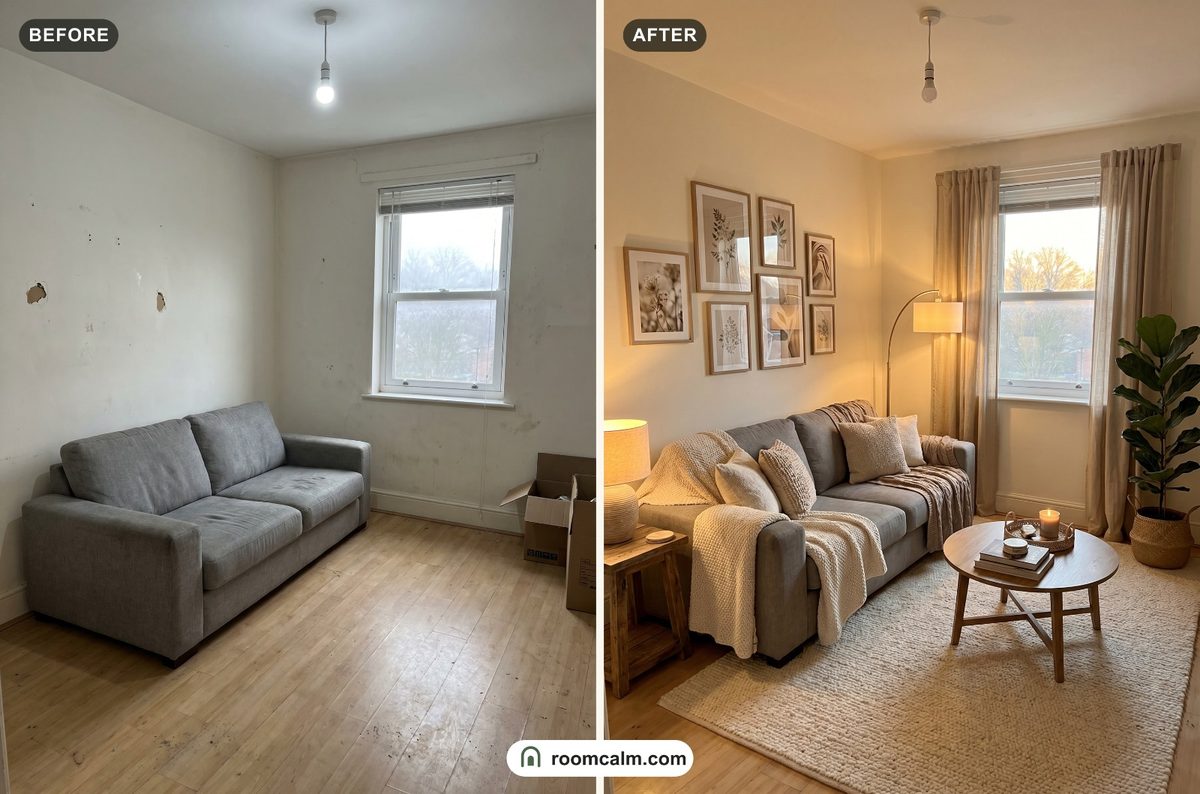
Redesign my room free →First redesign free · No signup
2. Group Books by Color
Arranging books by color creates visual order. You don’t need perfect ROYGBIV — grouping similar tones (all neutrals together, all darks together) creates calm. Mix orientations: some vertical, some horizontal stacked.
3. Leave Negative Space
The most common mistake is filling every inch. Leave 20–30% of each shelf empty. Negative space is what makes the displayed items look intentional rather than crammed. Every shelf should have at least one “breathing” zone.
4–7: Layer, Mix Heights, Add Greenery, Create Vignettes
Layer items front-to-back (art print leaning behind smaller objects). Vary heights on each shelf. Add one small plant or trail of greenery. Create mini vignettes of 3–5 objects that tell a story together.
- Start empty — only put back what you’d display in a store
- Leave 20–30% of each shelf empty for breathing room
- Group books by color, mix vertical and horizontal orientations
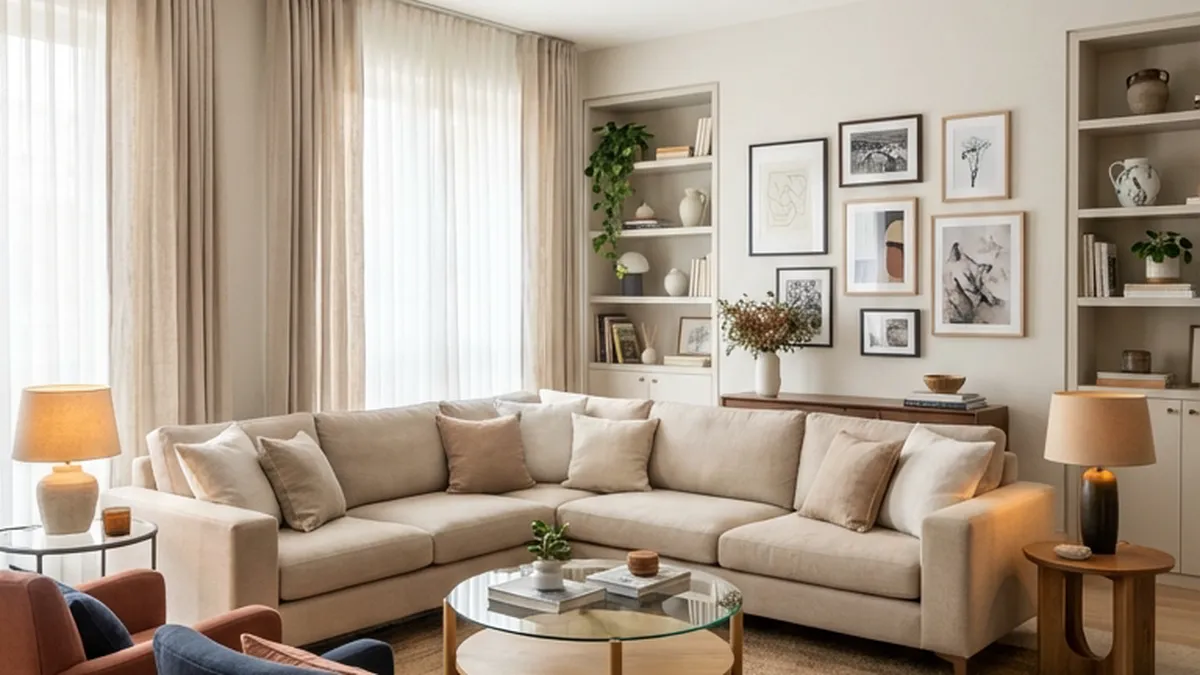
How to Style a Bookshelf: Top Amazon Picks
The right small accessories make all the difference when learning how to style a bookshelf. Below are the picks we use most often and recommend for any shelf.
Bookends: MyGift Brass Geometric ($21–$30)
Quality bookends are the cheapest way to add visual weight to a bookshelf. The MyGift brass geometric bookends are the most-recommended picks for anyone learning how to style a bookshelf because they pair with any color and style.
Buy MyGift Brass Wood Geometric Bookends on Amazon →
Ceramic Vase Set: Sullivans White ($28)
A 3-piece ceramic bud vase set is the most-versatile shelf object. Group them in odd numbers (3, 5, or 7) at varying heights for instant balance.
Buy Sullivans White Ceramic Bud Vase Set on Amazon →
Faux Eucalyptus Stems ($12–$25)
Faux eucalyptus is the go-to greenery for any shelf because it does not need light or water. Drop a few stems into a small ceramic vase and the shelf reads as alive without the maintenance.
Buy ANNIE&PANDA Faux Eucalyptus Stems on Amazon →
Decorative Objects: Sculptural Resin ($35–$59)
One sculptural object per shelf adds the kind of visual weight that vases alone cannot. The Brillantreal modern resin sculpture is the highest-rated 12-inch entry on Amazon for the price.
Buy Brillantreal Modern Resin Sculpture (12″) on Amazon →
Coffee Table Books ($20–$45 each)
Stacks of 2–3 coffee table books in neutral covers serve dual duty as both decor and reading material. Choose books with clean spines that match your color palette.
Shop Coffee Table Books on Amazon →
Decorative Storage Boxes ($25–$40)
Pretty storage boxes hide the random clutter that accumulates on every bookshelf. Pick fabric-covered or natural rattan boxes that match your shelf material.
Buy EZOWare Seagrass Storage Baskets (Set of 3) on Amazon →
How to Style a Bookshelf: The 7 Designer Rules
The seven rules below are the foundation of every well-styled bookshelf. Apply them in order for the cleanest result.
- Empty the entire shelf first. Start fresh, never restyle on top of existing clutter.
- Group books by color or theme. Color-grouped books photograph cleaner than alphabetical.
- Vary horizontal and vertical orientation. Some books standing, some stacked horizontally.
- Add negative space. Aim for 30–40% empty space on any shelf.
- Mix heights, textures, and materials. Three textures minimum on any shelf.
- Add greenery. One real or faux plant element per shelf.
- Create vignettes in odd numbers. Group objects in 3s, 5s, or 7s.
How to Style a Bookshelf Checklist
Use this checklist when styling any bookshelf to make sure you’ve hit all the designer rules.
- 3–5 books per shelf, grouped by color or theme.
- 1 sculptural object per shelf for visual weight.
- 1 piece of greenery (real or faux) per shelf.
- 30–40% negative space on every shelf.
- 3 different textures visible from any angle.
- 2 metal finishes maximum across the entire shelf.
- Coffee table books in stacks of 2–3, never single books.
- Decorative bookends at the start of book groupings.
- One personal element per shelf (a meaningful object).
- Edit ruthlessly, remove anything that doesn’t earn its place.
Common Bookshelf Styling Mistakes
Five mistakes that ruin even the best-styled bookshelves:
Mistake one: filling every inch. Empty space is part of the design. Leave 30–40% breathing room on every shelf.
Mistake two: only books. A shelf full of only books reads as a library, not a styled space. Always mix in objects.
Mistake three: matching everything. A perfectly matched set of accessories looks like a catalog. Mix shapes, materials, and eras.
Mistake four: too much variety. Three textures and two metals are the limits. More than that creates visual chaos.
Mistake five: forgetting depth. Use the full depth of each shelf. Place taller items behind shorter ones for layered visual interest.
How to Style a Bookshelf for Different Rooms
The same seven rules apply across rooms but the accent colors and objects change based on the room’s purpose.
Living room: coffee table books, ceramic objects, framed art, and family photos. Most curated of all bookshelf styles.
Office: functional storage, professional reference books, sculptural pieces, and one personal element.
Bedroom: softer items like candles, framed photos, dried flowers, and a few favorite reads.
Kitchen: cookbooks, ceramic vessels, and small herb planters. Functional first, decorative second.
Nursery: children’s books face-out, soft toys, and simple framed art at toddler eye level.
How Often to Restyle a Bookshelf
A bookshelf needs a refresh every 6–12 months to stay current. The objects you placed last spring may not match how the room feels now. Edit, swap, and rearrange seasonally to keep the shelf interesting.
The easiest seasonal refresh is to swap one or two of the smaller objects: a different vase, a new candle, a fresh stem of greenery. Leave the books and major sculptural pieces in place; only the swappable accessories change.
Take a phone photo of the shelf before and after every restyle. The photo is a brutal editor and shows you exactly what is working and what is not from across the room.
Bookshelf Styling for Photography
If you ever post your home on Instagram, real estate, or to friends, the bookshelf is one of the highest-leverage photo backgrounds in your house. Three rules for photogenic shelves:
Rule one: shoot with natural daylight, not overhead bulbs. The colors look truer and the textures pop.
Rule two: shoot at eye level, not from above. Eye-level photos read as designed; top-down photos read as inventory.
Rule three: keep all clutter outside the frame. The shelf in the photo is what gets judged, not the rest of the room.
Bookshelf Styling on a Budget
You don’t need expensive accessories to style a bookshelf well. Most of the best shelves we’ve photographed have a mix of $5 thrift finds, $15 Amazon basics, and 1–2 splurge pieces. The mix is what matters.
Look for sculptural objects at thrift stores and estate sales. Solid brass, ceramic, and natural wood pieces are everywhere at $2–$8 each. The hunt is the fun part, and the variety of sources is what makes a shelf look collected rather than purchased.
For larger pieces and bookends, Amazon is the easiest source. The MyGift bookends, Sullivans vases, and ANNIE&PANDA eucalyptus stems mentioned above are all under $30 each and ship in 2 days.
Final Tips on How to Style a Bookshelf
Three closing rules from professional stylists: never style a shelf in one sitting, photograph it from across the room before deciding it works, and leave more empty space than feels comfortable.
The first rule prevents over-styling. Walk away from the shelf after the first pass and come back the next day with fresh eyes. You’ll always remove 1–2 things on the second look.
The second rule catches mistakes the eye misses up close. The phone screen reveals what the room looks like to a guest entering for the first time.
The third rule is the hardest. Empty space always feels wrong while you’re styling, but it always looks right in the final photo. Trust the negative space; it is the secret ingredient in every well-styled shelf.
Building a Personal Bookshelf Aesthetic
The best bookshelves reflect the person who lives with them, not a Pinterest board. Add at least one item that has a story: a photograph from a meaningful trip, an heirloom from a family member, a souvenir from a memorable visit. The story is what makes the shelf yours.
Avoid copying any single shelf you see online perfectly. Take inspiration from many sources, then build your own combination. Your shelf will read as authentic instead of derivative.
Finally, give yourself permission to break the rules. The seven rules above are guidelines, not laws. If a particular shelf needs three sculptures or no books at all, do what works for that specific shelf. The rules are scaffolding; your taste is the building.
When to Restart from Scratch
If a shelf has felt wrong for more than a month, restart from zero. Empty everything, dust the shelves, and rebuild with fresh eyes. Most styling problems come from layering on top of old decisions instead of editing them out.
The restart should take 30 minutes, not three hours. Pick the books, place them in 3–5 piles, add the bookends, then add 2–3 objects per shelf. Stop. Walk away. Come back the next day to fine-tune.
Bookshelf Styling FAQ
How many books should I put on each shelf? 3–5 books per shelf in mixed orientation (some standing, some stacked) works best. More than that crowds the shelf and removes the breathing room that makes it look styled.
Should I group books by color or alphabet? Color grouping always photographs better. Alphabet works for libraries; color works for styled rooms. The right choice depends on whether the bookshelf is functional first or decorative first.
Can I style a bookshelf with only books? Technically yes, but it always looks like a library rather than a styled space. Even a single sculptural object per shelf transforms the look from utilitarian to decorative.
What’s the cheapest way to upgrade a bookshelf? Spend $30 on bookends, $25 on a vase set, and $25 on faux greenery. For under $100 total, you can transform any shelf from cluttered to curated.
How do I deal with a shelf that’s too tall and too narrow? Use vertical objects (tall vases, narrow framed art) and avoid wide horizontal pieces. The shelf proportions become an asset rather than a constraint.
A Quick Note on Quality vs Quantity
The single biggest lesson from styling dozens of bookshelves: fewer high-quality pieces always beat more cheap pieces. A shelf with 5 well-chosen items photographs better and feels more peaceful than one with 20 mid-tier items.
Apply the editing test: if you removed any single item, would the shelf look worse? If yes, keep it. If not, remove it. Most shelves can lose 30–40% of their objects without losing any visual impact.
Trust the editing process. Every well-styled shelf is the result of subtraction, not addition.