Reviewed and fact-checked by Sarah Mitchell — May 29, 2026
Decorate a living room the right way and it becomes the best room in your home. The best living rooms are built in layers: layout first, then furniture, then lighting, textiles, and finally the personal details that make the room feel lived-in.
If you want to decorate a living room from scratch, this step-by-step approach will help you avoid expensive mistakes and create a space that works for everyday life. Whether you’re starting with an empty room, a rental, or a room that just feels unfinished, these living room decor ideas will help you design with confidence.
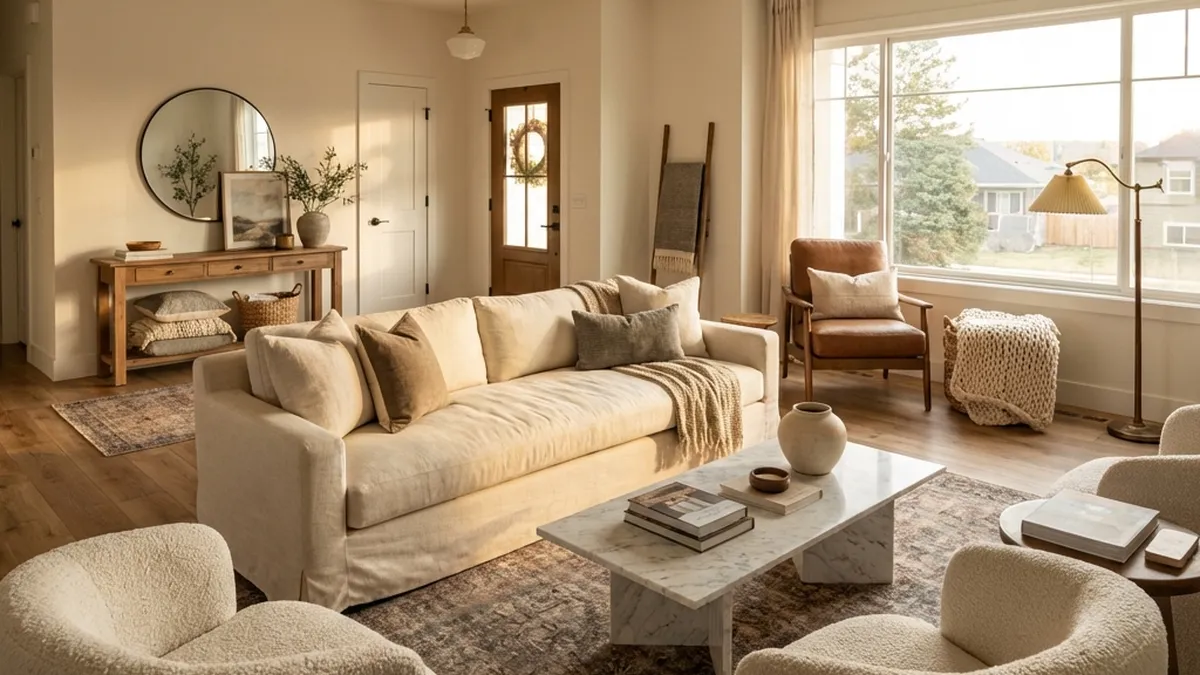
Start With Your Living Room Goal
Before you decorate a living room, decide what the room needs to do. A family room for movie nights, a formal sitting room, and a small apartment lounge all need different furniture proportions, traffic flow, and styling choices. This is the fastest way to narrow down living room layout ideas without getting overwhelmed.
Ask yourself three questions: How many people use the room daily? What is the main focal point, such as a TV, fireplace, or large window? And what do you want the room to feel like: cozy, polished, airy, or kid-friendly?
For more room-specific guidance, our guide on how to decorate a small living room is especially helpful if you’re working with limited square footage. Smaller spaces benefit from fewer, better pieces and a clear plan from the start.
Measure the Space and Plan Traffic Flow
When you decorate a living room from scratch, good design always begins with measurements. Measure wall lengths, window placement, door swings, outlet locations, and any built-ins. Then sketch the room on graph paper or use a room planner app so you can test sofa placement before you commit.
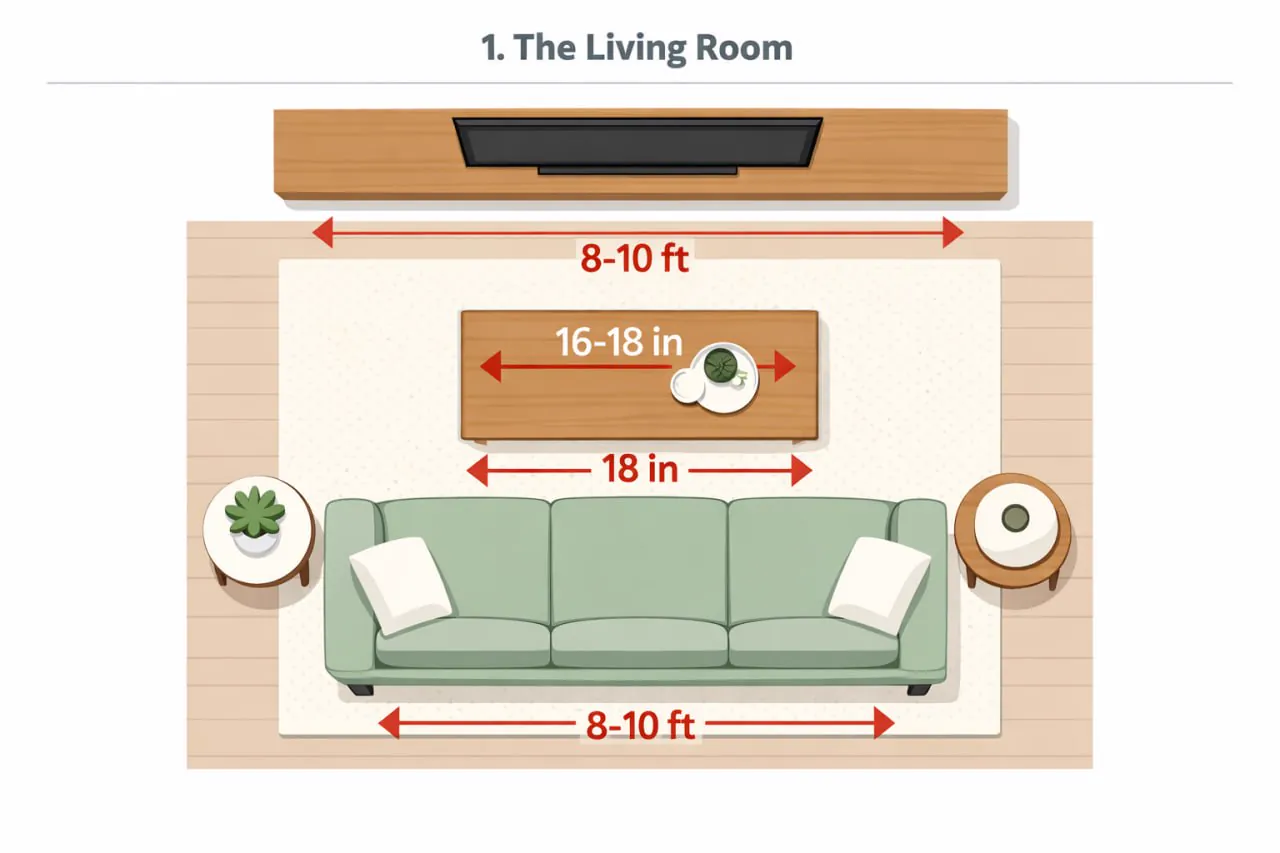
A practical rule: leave about 30 to 36 inches for main walkways, 14 to 18 inches between the sofa and coffee table, and at least 3 inches between a sofa and the wall if you want the room to breathe. If the room is narrow, consider floating furniture away from the walls to create a more intentional layout.
For furniture arrangement inspiration, HGTV’s furniture arrangement tips are a useful visual reference. The main goal is simple: the room should feel easy to walk through, with a clear focal point and no awkward bottlenecks.
See these ideas in your own bathroom — before you buy anything
Upload a photo of your bathroom and RoomCalm’s AI redesigns it — keeping your actual furniture — then tells you exactly what to change, in plain English.
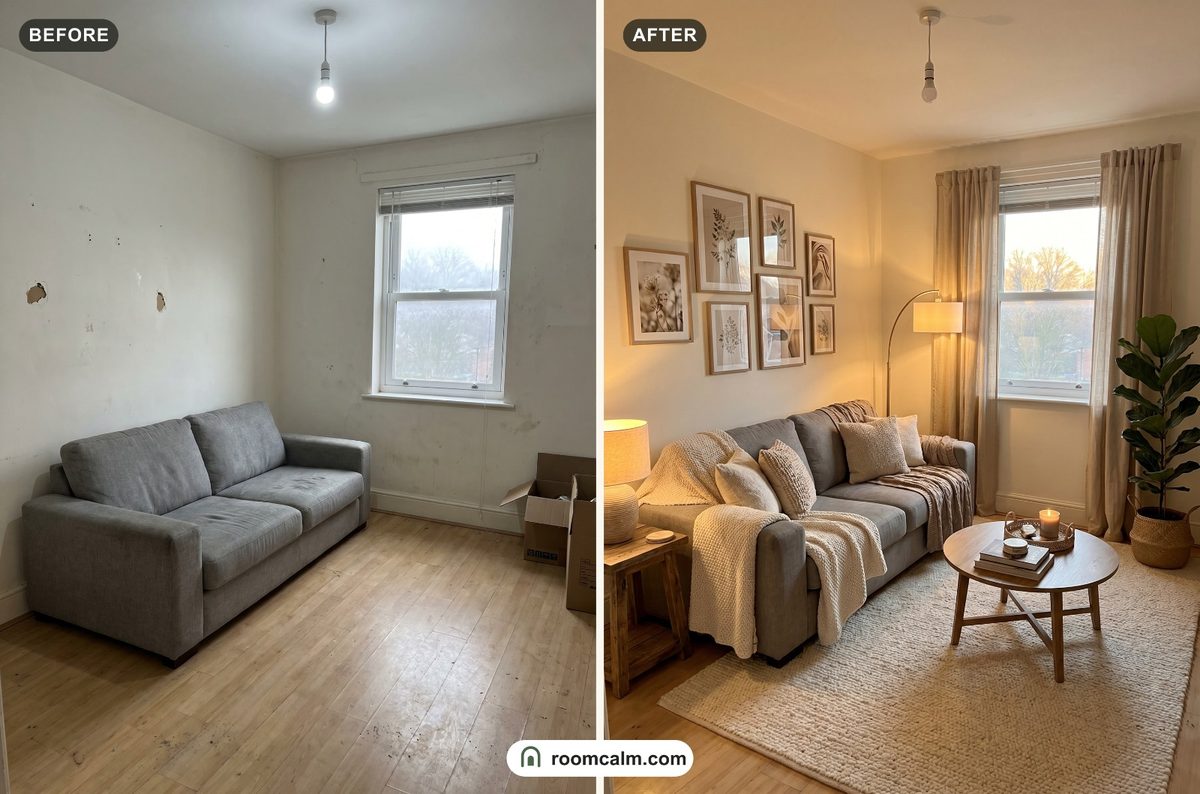
Redesign my bathroom free →First redesign free · No signup
Choose a Style and Color Palette
One of the smartest ways to decorate a living room is to choose a style direction before shopping. That could be modern organic, classic transitional, vintage eclectic, or relaxed coastal. Once the style is clear, your color palette becomes much easier to manage.
A good formula is 60-30-10: one dominant color, one secondary color, and one accent. If you want a calm room, use warm whites, sand, taupe, and soft black accents. If you want energy, bring in deeper greens, rust, or navy through pillows, art, and small decor.
For fresh inspiration, see our roundup of modern living room decor 2026. It’s a helpful starting point if you’re leaning toward cleaner lines, natural textures, and a more current palette.
Before committing to a wall color, test it confidently with the Samplize Peel & Stick Paint Sample (Benjamin Moore White Dove OC-17) — a repositionable, real-paint swatch you can stick directly on your wall and move around without any mess or drying time.
Buy Samplize Paint Sample on Amazon →
Pick the Right Sofa and Anchor Pieces
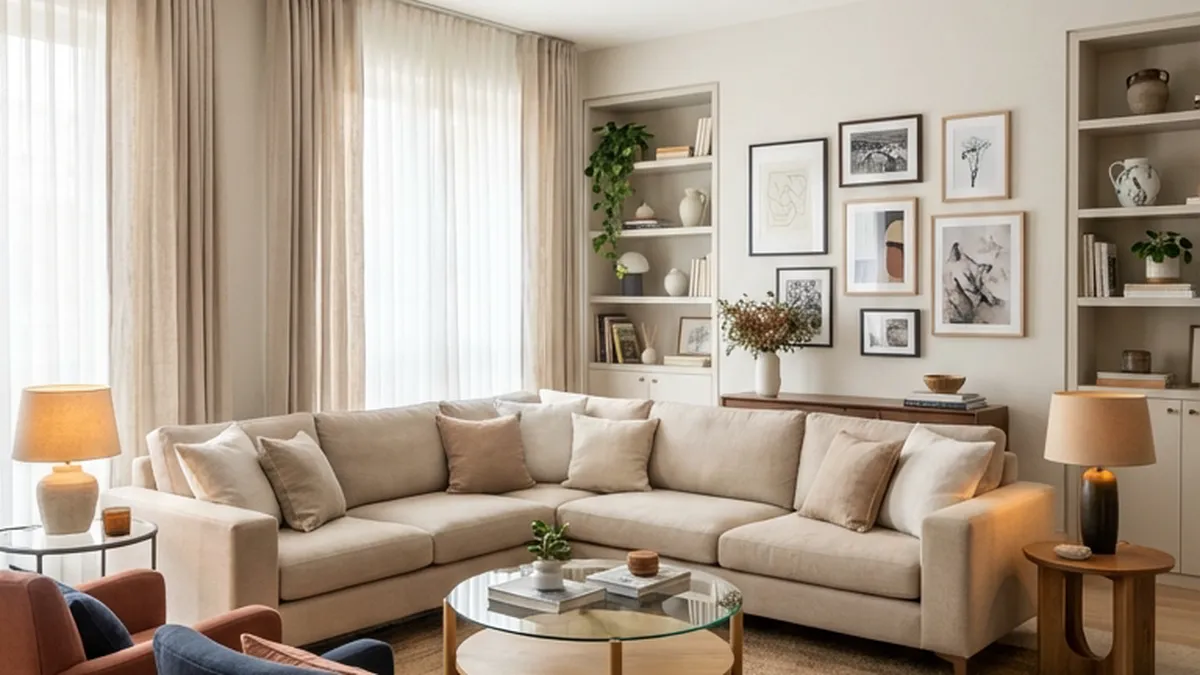
If you’re wondering how to decorate a living room in the right order, start with the biggest pieces first. The sofa typically anchors the whole composition, so choose one that fits the scale of the room and the way you live. In a smaller room, a loveseat or apartment-size sofa can feel more balanced than an oversized sectional.
When shopping, look for seat depth, cushion firmness, and leg height, not just color. A low-profile sofa with exposed legs can make a room feel larger, while a deeper sectional can create a more lounge-like feel in an open-plan home. Then add your second anchor piece, such as a pair of armchairs, an ottoman, or a media console.
For a real-world example, the IKEA KIVIK Sofa is a popular budget-friendly option, often priced around $700 to $1,000 depending on configuration. If you need a more flexible accent piece, the Christopher Knight Home Accent Chair usually falls in the $150 to $300 range and works well in corners or reading nooks.
Buy IKEA KIVIK Sofa on Amazon →
Buy Christopher Knight Accent Chair on Amazon →
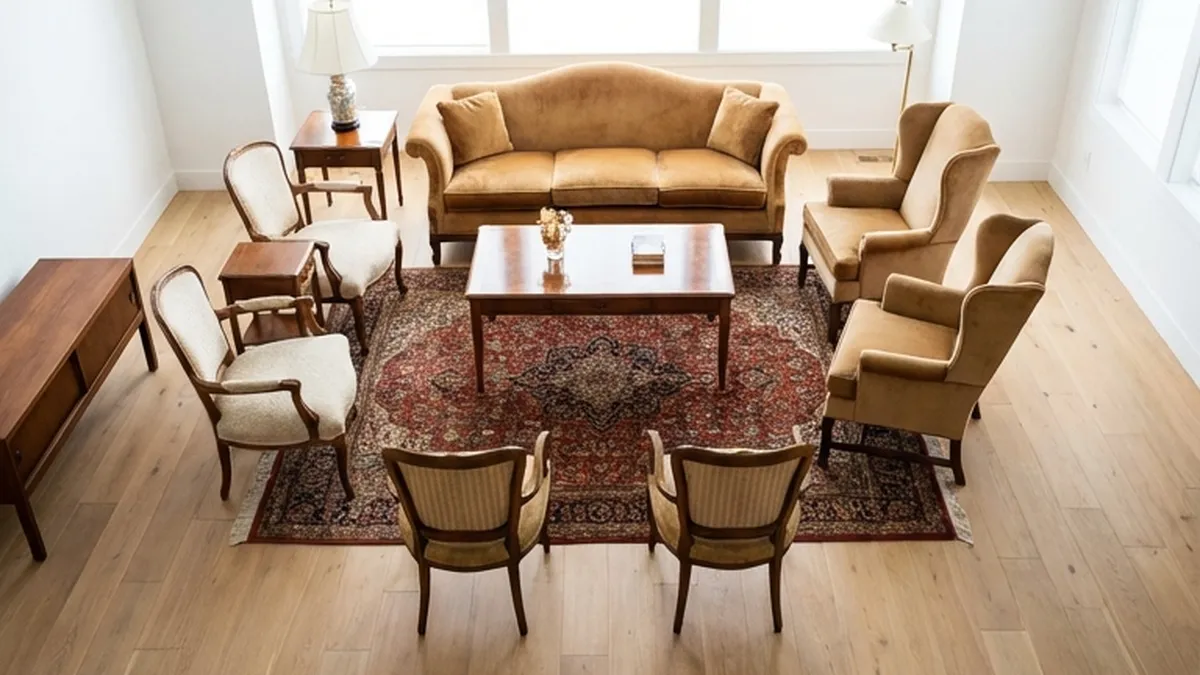
Layer Lighting for Function and Mood
Lighting layers are essential when you decorate a living room and want it to feel finished. Use three types: ambient lighting for overall brightness, task lighting for reading or hobbies, and accent lighting to highlight art, shelves, or architectural features. A living room with only one overhead fixture often feels flat and harsh.
Start with a ceiling light or recessed lights, then add at least two lamps. Table lamps work well on side tables, while floor lamps are ideal behind a sofa or in a dark corner. Dimmers are worth the upgrade because they let you shift the mood from daytime bright to evening cozy.
HGTV’s ideas for adding instant warmth and luxury are a good reminder that lighting can completely change the feeling of the room without major renovation.
For ambient brightness in a dim corner, the Brightech Sky LED Floor Lamp is a tall, dimmable torchiere that bounces warm light off the ceiling for soft, even coverage. Pair it with the Brightech Leaf LED Table Lamp on a side table to add focused task light for reading without crowding the room.
Buy Brightech Sky Floor Lamp on Amazon →
Buy Brightech Leaf Table Lamp on Amazon →
Add Rugs, Curtains, and Textiles
Soft furnishings do a lot of heavy lifting when you decorate a living room. A properly sized rug helps define the seating zone, especially in open layouts. As a rule, choose a rug large enough for at least the front legs of the sofa and chairs to rest on it; too-small rugs are one of the most common styling mistakes.
Curtains should hang high and wide to visually expand the room. If you’re on a budget, ready-made panels can look elevated when hung close to the ceiling with simple curtain rings. Then layer in pillows, throws, and maybe a textured pouf to soften the room and add warmth.
Textiles are also the easiest place to experiment with color and seasonal updates. If you rent or want a lower-commitment approach, this is where you can make the biggest impact without changing permanent finishes.
For a versatile anchor that works in most styles, the Safavieh Madison Collection 8×10 Area Rug offers a low-shed pile and neutral medallion pattern at a budget-friendly price. To freshen up the sofa without committing to new fabric, the MIULEE Chenille Throw Pillow Covers (Set of 4, 18×18) add tonal warmth and texture in minutes.
Buy Safavieh Madison Rug on Amazon →
Buy MIULEE Throw Pillow Covers on Amazon →
Style Tables, Shelves, and Walls
Once the room layout and larger furnishings are set, the final way to decorate a living room is with styling that adds personality. Coffee tables look best with a mix of heights and textures: maybe a stack of books, a ceramic bowl, and a small vase of stems. Side tables should be functional first, with just enough decor to feel intentional.
For shelves and wall decor, avoid filling every inch. Use a mix of framed art, sculptural objects, baskets, and a few personal items. Negative space matters because it gives the eye somewhere to rest, especially in smaller rooms.
If your living room connects to another space, it helps to think about flow with nearby rooms too. Our guide to how to decorate your dining room can help you coordinate colors and finishes if the two spaces are visible from each other.
A clean-lined option like the Walker Edison Mid-Century Modern Round Coffee Table gives you a sturdy centerpiece with a lower storage shelf that’s perfect for stacking books and trays. For a blank wall, the Greenco Set of 3 Floating U Shelves are a low-commitment way to display small art objects, plants, and personal pieces.
Buy Walker Edison Coffee Table on Amazon →
Buy Greenco Floating Shelves on Amazon →
Shop Smart on a Budget
You do not need designer prices to decorate a living room that looks polished. The trick is to spend most on the pieces you use every day: sofa, rug, lighting, and maybe one accent chair. Then save on decor objects, framed prints, and pillow covers, which are easy to swap later.
Shop secondhand for wood tables, vintage lamps, and art. Check outlet stores, warehouse sales, and online marketplaces for quality basics. If you decorate a living room from scratch on a tight budget, prioritize scale and layout before trying to “finish” the room with accessories.
A good budget rule is to buy in stages. Start with the essentials, live with the room for a few weeks, and then add layers based on what is actually missing.
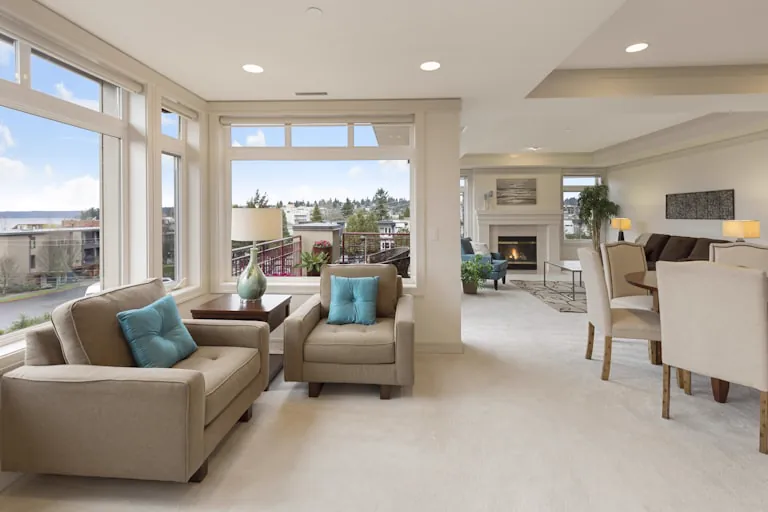
Common Living Room Decorating Mistakes
Some of the biggest mistakes when you decorate a living room are easy to fix once you know what to look for. Buying furniture that is too large or too small for the room can throw off the whole balance. So can pushing every piece against the walls, using a rug that is too tiny, or matching everything too closely.
Another common issue is forgetting about lighting layers. A beautiful room still feels incomplete if the light is harsh or uneven. Also, don’t overlook the focal point: every arrangement should support whatever the eye lands on first, whether that’s a fireplace, TV, or art wall.
When in doubt, step back and edit. A room often looks more expensive when it has fewer, better-chosen pieces rather than a crowded collection of decor.
One often-overlooked fix is a quality rug pad: the Mohawk Home Dual Surface Non-Slip Rug Pad (8×10) protects floors, prevents slipping and bunching, and adds the cushioned feel that makes any rug feel a step more expensive underfoot.
Buy Mohawk Rug Pad on Amazon →
Living Room Decorating Checklist
Use this quick checklist before calling the room done:
- Measure the room and confirm traffic flow.
- Identify the focal point and arrange seating around it.
- Choose sofa placement before buying accessories.
- Select a rug size that fits the seating group.
- Layer ambient, task, and accent lighting.
- Add curtains, pillows, and throws for softness.
- Style tables and walls with a mix of heights and textures.
- Edit for scale, balance, and breathing room.
If you follow the sequence above, learning how to decorate a living room becomes far less intimidating. The best living room decorating ideas are not about copying a perfect photo; they are about building a room that fits your space, your routine, and your budget. Start with the layout, layer in the essentials, and let the finishing touches come last.
Stop guessing — see your bathroom redesigned before you spend a dollar
Try RoomCalm free →First redesign free · No signup · Keeps your actual furniture